
How to Write a Press Release for an Event
March 27, 2026 at 11:03 AM UTC
 Written by Huey Yee
If you are running an event, you need a reliable way to let people know it exists and to help them decide whether it is worth their time.
A press release is one of the most straightforward ways to do that.
An event press release is a structured announcement that covers the basics:
- Who is hosting
- What is happening
- When and where it takes place
- Why it matters
- How people can take part
For example:
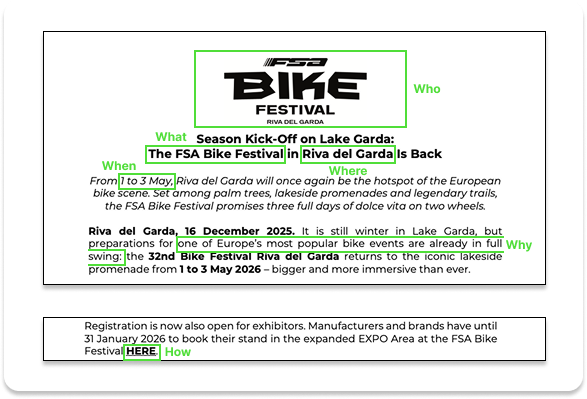
The goal of the press release is not to sound impressive. Instead, it is to make sure the information about the event is easy to understand and easy for the audience to act on once they read your press release.
This is where event press releases differ from general announcements.
A normal press release often exists to document a change. An event press release has a more practical purpose.
It needs to help someone make a decision. Should I attend this? Should I share this? Should I care about this at all?
To understand how to do that, it helps to start with a simple question: why do you need an event press release?
Why You Need an Event Press Release
You need an event press release because it gives your event a clear, credible way to reach people who are not already in your circle.
More practically, it does a few important jobs:
1. It helps people decide to attend
The main purpose of an event is simple. You want people to show up.
A good event press release puts the key details in one place and explains why the event is worth someone’s time.
Date, location, topic, and reason to attend should all be clear. If people have to guess, scroll, or search for basic information, many will not bother.
The easier it is to understand what the event is and how to join, the more likely someone is to make a decision.
Warning: Many weak event announcements fail here. They spend too much time talking about the organizer and not enough time explaining what actually happens at the event. Or they bury the registration link. Or they assume the reader already knows why the topic matters.
2. It extends your reach beyond your own audience
Your website, email list, and social channels mostly reach people who already know you. That is fine, but it has limits.
Media coverage can put your event in front of people who would not otherwise hear about it. Even a small mention in a relevant publication can introduce your event to a new audience that already cares about the topic or industry..
Over time, this also helps more people recognize your brand, not just this one event. But that is a side effect, not the main goal.
3. It adds credibility
A properly written press release signals that your event is organized and serious. It shows that you have thought through the details and are willing to put them in front of the public.
That matters for attendees, but also for partners, sponsors, and speakers.
People are more comfortable associating themselves with something that looks clear and well put together.
It also matters for journalists. Clear, well-structured information is easier to use.
If your release is confusing or sloppy, it creates extra work for them. Extra work is a good reason to skip your story.
Types of Event Press Releases
Not every event press release serves the same purpose. The timing changes what it is for.
1. Pre-event press release
This is the main announcement. It goes out before the event and focuses on awareness and interest.
It should answer the basics and give people enough information to decide whether to attend and to plan for it. In most cases, this is the version you spend the most time on.
The most common mistake here is waiting too long. If you send a pre-event release too close to the date, you limit who can realistically attend and how likely journalists are to cover it.
Example of pre-event press release:
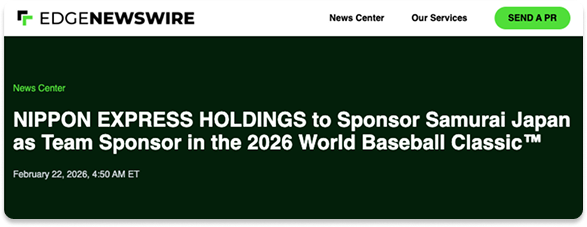
This is considered a pre-event press release because the 2026 World Baseball Classic has not taken place yet, and the announcement focuses on a sponsorship agreement made ahead of the tournament.
Its purpose is to build awareness and set context before the event begins by informing the public about Nippon Express Holdings’ involvement with Samurai Japan, rather than reporting on outcomes or recapping what has already happened.
2. Day-of-event or live update press release
This is used when timing matters.
For larger events, conferences, or public announcements, you may need to share last-minute updates, changes, or highlights as they happen.
This is not always necessary. For many smaller events, it is overkill. But for time-sensitive or news-driven events, it can help keep coverage accurate and current.
3. Post-event press release
After the event, this version focuses on what happened such as:
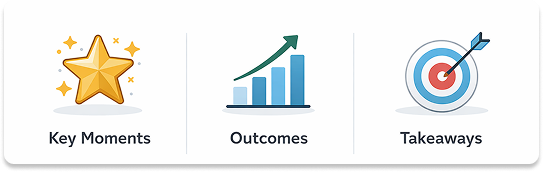
This helps extend the life of the event.
It creates a public record that you can reference later and gives you something concrete to point to when talking about results.
It is also useful when the event itself is not the end goal, but part of a larger initiative.
Each type serves a different purpose, but they all rely on the same fundamentals. The difference is in what you emphasize and when you send it.
That brings us to the practical part.
Event Press Release Structure
The structure is similar to a normal press release. The difference is in emphasis. For events, clarity and action matter more than anything else.
1. Headline
The headline should tell people what the event is and why it matters.
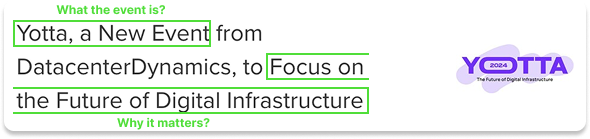
Keep it short. Be specific. Avoid vague language. The goal is not to impress. Instead, the headline is to make the event clear at a glance.
2. Summary
This is the short version of the story. The usual practice is to use two or three sentences. It should answer the basics at a glance: what is happening, who it is for, and why it matters.
If someone only reads this part, they should still understand what the event is about.
Think of the summary as the filter. A busy editor, journalist, or reader will often decide whether to keep reading based on these few lines.
If the summary is vague, overloaded with buzzwords, or focused on internal language, many people will stop right there. A clear, practical summary makes it easy for them to see why the event is relevant and worth their time.
3. Dateline
The dateline sets context. It tells the reader where the announcement is coming from and when.
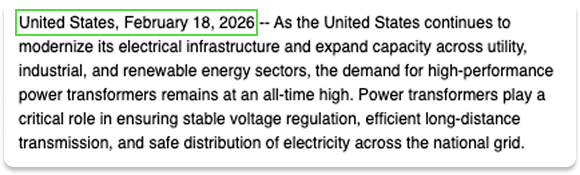
This sounds minor, but it helps anchor the news in time and place, especially for events that are tied to a specific location.
4. Body
Start with the most important part of the event. Not your company history or background context.
You need to lead with what makes the event relevant.
Then cover the details:
- What kind of event it is, in-person, virtual, or hybrid
- When and where it happens
- Who should attend and why
- What makes it useful or different
- Any notable speakers or highlights
- How to register or get more information
Warning: This is where many releases become hard to use. They either dump too much information without structure, or they stay so vague that nothing is clear.
The goal is to say the right things in a way that is easy to scan and understand.
If you include quotes, they should add clarity or context. A quote that just repeats the headline in longer form does not help.
5. Boilerplate
This is the short “about the company” section. Three or four sentences is enough. Its job is to explain who you are and why you are relevant to the event.

6. Contact information
For this section, you need to include the details a journalist would use to reach you.
This section is necessary in case a journalist needs more information than what is in the release.
When that happens, they should be able to look here and immediately see who to contact and how to reach them.
Include the contact person’s name, role, and clear contact details such as an email address or phone number, so follow-up is simple and fast.

Guidelines for Writing Event Press Release
1. Start with a real angle
Every event has a reason to exist.
When you write about it, you should be able to point to something concrete, such as a timely topic, a specific audience, or a practical outcome. That is the angle.
Leading with this matters because it explains why the event is relevant to people outside your organization.
If you cannot clearly show why this event matters now, it will be hard for anyone else to care or to cover it.
2. Use clear, direct language
You should use plain language to make sure the audience can understand the event at one glance. The goal is not to sound clever or impressive, but to be clear.
This is important because journalists and readers often skim first. If a sentence is easy to misread or misunderstand, it probably will be, and that usually means the message gets lost.
3. Avoid hype
Overly promotional language makes your release harder to trust and harder to use. Journalists are trained to spot it and filter it out.
To avoid that, stick to facts, context, and real reasons to attend the event.
This approach gives your release a much better chance of being taken seriously and actually used.
4. Be specific about value
In the press release, be clear about what someone will actually get from attending. The important details include:
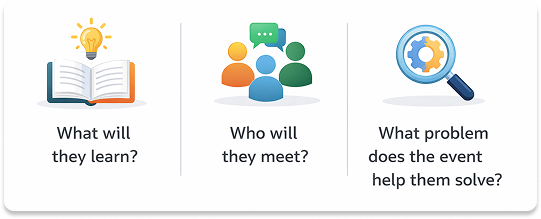
If you are vague about these important details, it becomes much harder for people to decide whether the event is worth their time.
5. Use numbers if necessary
If your event has 20 speakers, say so. Concrete details are easier to understand than general claims because they give people something real to picture and evaluate.
Saying “many speakers” or “an exciting lineup” does not tell the reader what they are actually getting.
Specific details help people decide whether the event is relevant to them and worth their time.
6. Keep it easy to scan
Short paragraphs and clear sections make your press release easier to read. Many people, especially editors and journalists, will skim first before deciding whether to read closely.
A press release that is easy to scan helps them quickly find the key details they need.
If the structure is messy, important information gets missed and the story is more likely to be ignored.
7. Proofread
Mistakes in a press release will make you look unprofessional. They make you look careless and make journalists less likely to trust the details you are sharing.
If basic facts, names, or dates are wrong, it raises questions about what else might be wrong too.
This is basic, but it is still one of the most common problems.
A release with errors is easier to ignore and harder to take seriously, especially when a journalist is deciding what to use under time pressure.
Once you have worked through these guidelines, your press release should be clear and ready to use.
But good writing on its own is not enough. A well-written press release still needs proper distribution to have any real impact.
If it does not reach the right journalists, publications, or audiences, it will not get read or used, no matter how good it is.
That is why distribution matters just as much as writing, and why the next step is to think carefully about how to get your event press release in front of the right people.
How to Distribute Your Event Press Release
There are several ways to get your press release out. You can publish it on your own site, send it directly to journalists, share it through partners, or use distribution platforms.
Each option has different trade-offs in terms of reach, control, time, and effort.
The right approach depends on your goals, your audience, and how much time and resources you can realistically put into promotion.
What matters most is choosing the ones that actually help your release reach the people who are likely to care about your event.
1. Publish it on your own site
Publishing your press release on your own site gives you a stable reference point.
It creates a page you can link to, share, and point journalists or partners to. It also helps with search visibility over time, since the content is indexed and stays accessible.
However, this is a passive step.
People still have to come to you to see it. Simply posting a press release on your site does not create attention on its own.
That is why this should be treated as infrastructure, not distribution. It supports your outreach, but it does not replace it.
2. Share it through your own channels
Social media and email are simple ways to spread the word about your event, especially to people who already follow you or are on your mailing list.
They are useful for making sure your existing audience knows what is happening and has an easy way to get the details.
But, the limitation is reach.
Most of the time, these channels mainly circulate your message within your current network. That is helpful, but it does not do much to introduce your event to people who have never heard of you before.
3. Send it to a focused media list
You can also reach out directly to journalists who cover your industry or topic.
This takes more time than posting on your own channels, but it gives you more control over who sees the story and how it is positioned.
When done properly, this approach can lead to more relevant and higher-quality coverage.
The key here is relevance.
A small, well-targeted list of journalists who actually cover your space usually works better than sending the same message to a large, generic list that includes people who are unlikely to care.
4. Use a press release distribution service
Distribution services exist to solve a simple problem: getting your press release in front of more outlets without doing everything manually.
They are not magic, but they are efficient, especially when you need scale, consistency, or speed.
Instead of emailing dozens of contacts one by one, you can rely on a system that already has distribution in place.
For example, services like EdgeNewswire can distribute your press release to established media outlets such as USA Today, AP News, and Business Insider.
This will make your release easier to access for publishers and journalists who use those networks.
These services are most useful when you want broader reach, predictable distribution, and reporting on where your release appears.
They do not replace good writing or a good story. They simply make the distribution part easier and more reliable.
Final Takeaway
Your event press release is competing with many others for attention.
The way to stand out is not by making bigger claims or using louder language. It is by being clearer, more useful, and better timed than the rest.
Clear information helps people understand what the event is and why it matters. Good timing gives your release a better chance of being seen.
And good distribution makes sure it actually reaches the people who might care. Even a well-written release does very little if it never gets in front of the right audience.
If someone can quickly understand the event, see why it is relevant, and know what to do next, your press release is doing its job.
The combination of clear writing and smart distribution is what makes that happen.
Frequently Asked Questions (FAQs)
Q: How far in advance should I send an event press release?
A: There is no single perfect timeline, but most events benefit from being announced at least two to four weeks in advance.
This gives journalists time to plan coverage and gives potential attendees time to adjust their schedules. For larger events, conferences, or events that require travel, you may need even more lead time. Sending it too late limits both attendance and media interest.
Q: Should I send more than one press release for the same event?
A: In many cases, yes. A common approach is to send a pre-event release to announce the event, and a post-event release to summarize what happened. For larger or news-driven events, you might also send a short update closer to the date or on the day itself. The key is not to repeat the same message, but to update the angle and purpose each time.
Q: Do I need a different press release for different audiences?
A: Often, yes. The core facts stay the same, but what you emphasize can change. An industry publication may care more about the business or technical angle.
A local outlet may care more about location and community impact. Adjusting the framing makes your release more relevant without changing the underlying information.
Q: Can I reuse the same event press release every year?
A: You can reuse the structure, but not the content. Journalists and readers want to know what is new or different this time. Dates, speakers, topics, and outcomes should be updated. If the release looks like last year’s with a few numbers changed, it is much easier to ignore.
Q: Is it better to attach the press release or paste it into the email?
A: In most cases, pasting the press release into the email works better. Many journalists prefer not to open attachments unless necessary. Keeping everything visible in the email makes it easier for them to quickly scan and decide whether the story is relevant.