




At a glance
- Company
- Amata Corporation PCL
- Announcement
- Partnership
- Location
- Nong Irun Subdistrict, Ban Bueng District, Chonburi
Key figures
- Bags targeted for distribution by year-end
- over 3,000
- Bags distributed
- over 1,000
- Used PET bottles collected in first phase
- over 3 tons
- Schools visited
- five
People
- Osamu SudoActing Chief Marketing Officer of AMATA Corporation PCL
Products and programs
July 21, 2025 -- Amata Corporation PCL has taken a strong step forward in its commitment to sustainability through the “Re-No-Waste: Eco-Friendly for a Sustainable Future” initiative. The project aims to create a model for systematic plastic waste management while promoting circular economic principles.
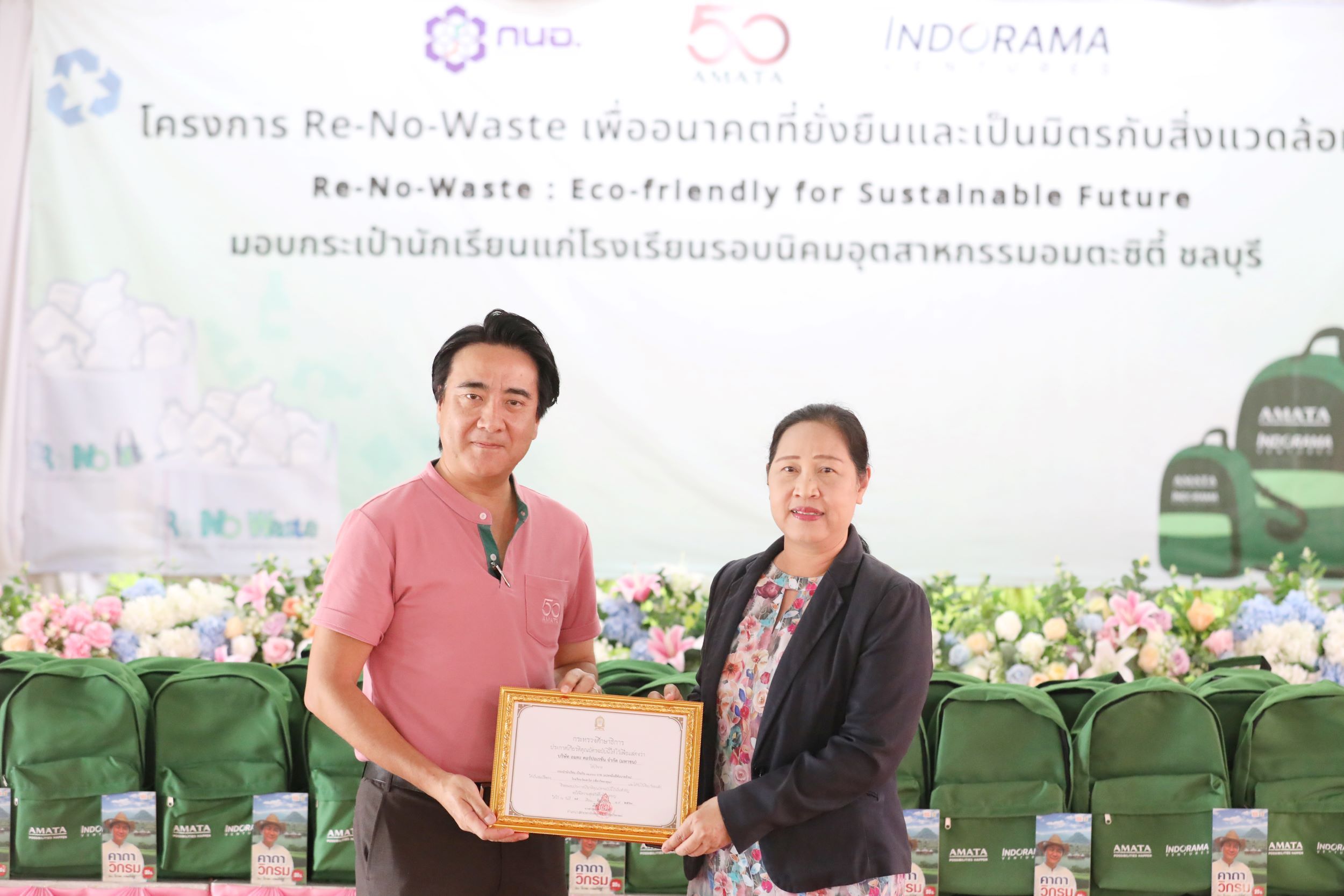
This collaboration involves AMATA Corporation PCL, Indorama Ventures PCL, the Industrial Estate Authority of Thailand (IEAT) (Amata branch offices), and Amata’s industrial city customers. The initiative encourages waste separation and recycling in both factories and surrounding communities. The collected plastic waste is upcycled into school backpacks, with the goal of distributing over 3,000 bags to students at local schools around Amata City Chonburi and Amata City Rayong industrial estates by the end of this year.
Mr. Osamu Sudo, Acting Chief Marketing Officer of AMATA Corporation PCL, recently joined a school bag donation event in Nong Irun Subdistrict, Ban Bueng District, Chonburi, visiting five local schools: Khao Phai Temple School, Ban Ang Wian Community School, Klong Yai Temple School, Ban Bueng Kradon School, Ban Noen Mook School.
Together with CSR teams and employee volunteers, Mr. Sudo handed out over 1,000 school bags to students.
“Amata intends to create shared value with the community. These school bags are not just student essentials, they are a symbol of change and hope for a better world. At the same time, we pass on environmental values to the next generation. Giving these bags is more than just a gift, it’s hopefully the beginning of learning and sustainable change,” said Mr. Sudo.
In the first phase, over 3 tons of used PET bottles were collected from factories, communities, and public spaces around the estates. These were processed through environmentally certified recycling and transformed into high-quality, functional school bags.
“From my perspective, the circular economy is rooted in collaboration and sustainability. It starts with understanding and cooperation, then action, and over time, those actions become habits. The ‘Re-No-Waste’ campaign isn’t only about producing and distributing bags; it’s about long-term social impact. We're running education campaigns on waste separation, resource efficiency, and sustainable practices, allowing youth and communities to be part of the solution. This aligns with the UN Sustainable Development Goals (SDGs), especially on climate action, quality education, and sustainable cities,” Mr. Sudo added.
Amata and its partners believe that small, consistent local actions can lead to meaningful national impact. By engaging communities and empowering youth, the initiative sets the foundation for a zero-waste future and a truly sustainable Thailand.
*******************************************
For more information, please contact:
Public Relations, Communication Department, Amata Corporation PCL.
E-mail: [email protected]
If you detect any issues, problems, or errors in this press release content, kindly contact [email protected] to notify us (it is important to note that this email is the authorized channel for such matters, sending multiple emails to multiple addresses does not necessarily help expedite your request). We will respond and rectify the situation in the next 8 hours.
Questions around this news
What is the Re-No-Waste project, and who is involved?
The Re-No-Waste initiative is a plastic-waste management and recycling effort involving Amata Corporation, Indorama Ventures, the Industrial Estate Authority of Thailand’s Amata branch offices, and industrial customers. It encourages waste separation in factories and nearby communities, then turns collected plastic into school backpacks. The project also includes education campaigns on waste separation, efficient resource use, and sustainable practices.
How are used plastic bottles turned into school bags in the project?
In the project’s first phase, used PET bottles were collected from factories, communities, and public areas near the industrial estates. The release says the bottles went through environmentally certified recycling and were transformed into functional school bags. It does not describe the specific processing steps or identify the recycling facilities.
How many school bags have been distributed, and where?
At a donation event in Nong Irun Subdistrict, Ban Bueng District, Chonburi, AMATA’s acting chief marketing officer and volunteers distributed over 1,000 bags to students at five local schools. The initiative aims to distribute over 3,000 bags to students near Amata City Chonburi and Amata City Rayong by the end of 2025.
What does circular economy mean in plastic recycling?
A circular economy aims to keep materials and products in use rather than treating them as waste after one use. In recycling projects, this can mean collecting discarded materials, processing them into usable inputs, and making new products from those inputs. Effective systems generally depend on collection, sorting, processing, and demand for the recycled material.
What is PET, and why is it used for drink bottles?
PET, or polyethylene terephthalate, is a lightweight plastic commonly used for beverage bottles and food packaging. It can be collected and recycled into materials for new products, including fibers and textiles. Whether it can be recycled in practice depends on local collection and processing systems and on the condition and sorting of the material.
Earlier from Amata Corporation PCL
- AMATA Emphasizes ASEAN Growth and Export Diversification in Response to U.S. Tariffs
- Amata Corp Expects 2025 Industrial Land Sales Up 15% as Laos Project Adds to Sustained Investor Demand in Thailand and Vietnam
- Amata – The Leading Industrial Developer Celebrates Its 30 Years Presence In Vietnam
- Siam City Concrete and Amata Corporation Sign MoU for Green Construction and Sustainable Development
