

How to Submit and Distribute Your Press Release?
April 1, 2026 at 06:46 AM UTC
 Written by Kelly Goh
After writing a press release, most businesses get stuck on one question: how do you actually get it in front of the right people?
Many try emailing a few journalists and hope for the best. Sometimes it works, but most of the time it gets buried in crowded inboxes.
Sending a press release isn’t about blasting it everywhere. It’s about getting three fundamentals right:

Does This News Deserve a Press Release?
Before talking about where to send your press release, it’s worth pausing for a moment and asking a simple question. Is this actually news?
Press releases work best when something meaningful has happened. For instance:
- New product or service launch
- Funding round
- Partnership or collaboration
- New market
- Major hire
- Company milestone
These are things that make sense in a news format because they change something about your business or your market.
What usually doesn’t work is treating a press release like an ad. Small updates, routine promotions, or “we’re great” announcements rarely give editors or readers a reason to care.
If the story only matters to your own team, it probably needs a different format such as social media posting.
So, once you’re confident you have something newsworthy, the next decision is how to get it out into the world.
How to Submit a Press Release?
There are only two common ways businesses get a press release out:

1. Sending It To Journalists Directly
This is the hands-on route, and it works best when your story is very specific and you already have a clear idea of who covers your industry.
Instead of sending your news out widely, you research the right writers, look at what they’ve published before, and understand the kind of stories they usually work on.
Then you craft a short, personal pitch that explains why your announcement fits their beat and why it might matter to their readers.
When this approach works, it can lead to highly targeted coverage from exactly the outlets you want to be on. The story is more likely to land in the hands of someone who already cares about your topic, which often means better context and better placement.
The trade-off is the workload and the uncertainty that comes with it.
Building and maintaining media lists takes time. Same goes to writing individual pitches and following up.
And even after all that effort, the outcome still depends on whether the right person opens your email at the right moment and decides your story is worth pursuing.
2. Using A Press Release Submission Platform
This is the scalable route. Instead of spending your time chasing individual inboxes, you submit your press release once and let the platform handle the distribution for you.
Your announcement gets placed where editors, journalists, and readers already go to look for news. Platforms like EdgeNewswire handle the delivery side while giving you visibility into where your release appears and how far it travels.
Rather than guessing who might see your story, you get a clearer picture of where it shows up and how it performs.
But…
Which One Should You Use?
Neither option is a magic switch for publicity, and both can work in the right situation. What they really change is how you balance effort, control, and reach.
Many businesses end up using both at different times. A highly targeted story might be pitched directly to a few key journalists, while bigger announcements are pushed through a distribution platform to make sure they reach as many relevant places as possible.
The right choice depends on your goals, your resources, and how far you want your story to travel this time around.
If you decide to take the hands-on route, here’s what the process looks like:
How To Pitch Journalists Directly?
Step 1: Find the right journalists
Start with people who already cover your topic.
Don’t rely on titles like “editor” or “reporter.” Look at recent articles and see who consistently writes about your industry, your customers, or your type of announcement.
Step 2: Check fit before you pitch
Take two minutes to confirm you’re not forcing it.
If they only write about policy and you’re pitching a product launch, it’s a mismatch. A quick scan of their last few stories usually tells you what they actually care about.
Step 3: Write a pitch that respects their time
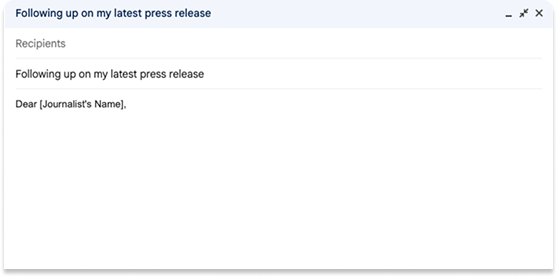
Keep it short. Make the news obvious in the first line. The goal is not to tell the whole story. It’s to make the announcement clear enough that they want to read the release.
Step 4: Use a specific subject line
Avoid generic subject lines like “Press Release.” Put the actual news in the subject line so they can understand the point at a glance.
Step 5: Make it easy to read immediately
Paste the press release into the email body. Attachments and extra clicks are where pitches go to die. If you have images or extra materials, include a link instead of attaching large files.
Step 6: Follow up
A single polite follow-up is fine. Chasing isn’t. If there’s no response after one reminder, it’s usually better to focus on other outlets or try a different angle next time.
Direct outreach can work especially well in niche industries, but it works best when it’s treated as relationship-building, not mass outreach.
If that sounds like a lot of work, it’s because it is. That’s also why many companies choose a more scalable option: using a press release distribution platform.
How Press Release Distribution Platforms Actually Work?
Press release distribution is designed to take your announcement and place it across a network of media sites and publishing partners, without you having to manage dozens of individual pitches.
Step 1: You submit your press release and choose your reach
Upload your press release and select the distribution package that matches how wide you want your news to go.
Step 2: The platform distributes your news across its network
Once submitted, the platform sends your content out to its network of media sites, aggregators, and publishing partners.
Your release is placed in environments where editors, journalists, and readers already go to look for information.
Step 3: Different outlets use your release in different ways
Some sites publish the release directly.
Some journalists discover it through these systems and use it as a source for their own stories. Some ignore it. That mix is normal and part of how media distribution works.
Step 4: Your news becomes easier to find and reference
Instead of relying on one email landing in the right inbox, your announcement is now visible in places where it can be found, indexed, and referenced over time.
Step 5: You track where it appears and how far it travels
With services like Edgenewswire, you also get reporting that shows where your release appears. This gives you a clearer picture of your reach and helps you understand what’s working.
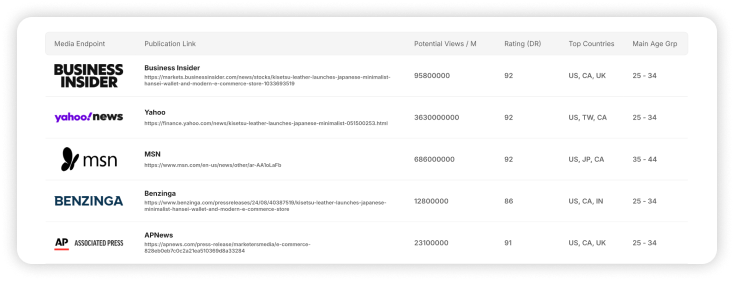
Step 6: You turn PR into a repeatable process
Rather than treating each press release like a one-off gamble, this approach makes distribution more predictable and measurable.
Over time, you can refine your stories, your timing, and your strategy based on real results.
How To Write A Press Release Editors Will Use
No matter how you send your press release, the writing still does most of the work. A common mistake is treating a press release like a marketing copy.
Editors and journalists are not looking for slogans. They are looking for clear, useful information.
#1 Start with the actual news
The opening paragraph should explain what happened, who was involved, when and where it happened, and why it matters.
Many people will only read this far. If the point isn’t clear here, it probably won’t get clearer later.
#2 Write a concise headline
A good headline tells the reader what happened in plain language, without trying to be clever or dramatic. It shouldn’t tease or hide the point of the story.
Someone should be able to read your headline and immediately understand what the announcement is about.
If they have to click or read the first paragraph just to figure out what happened, the headline isn’t doing its job.
The goal is simple: make the news obvious at a glance so an editor can decide, in seconds, whether it’s relevant to their audience.
#3 Use the inverted pyramid approach
Structure your press release using the inverted pyramid approach: lead with the most important facts, then follow with supporting details and background.
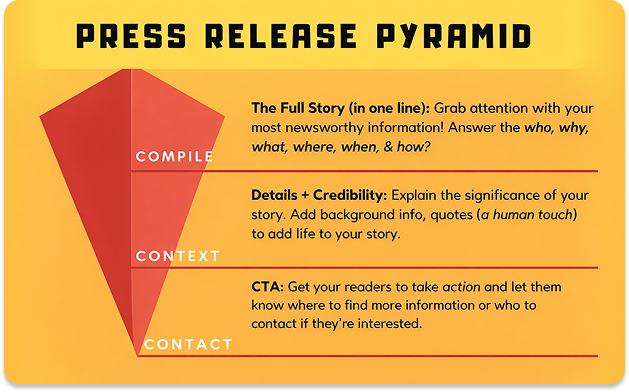
Caption: Image credits to MarketersMEDIA Newswire
#4 Use quotes that add context
Quotes should help explain the decision, the impact, or the thinking behind the announcement. They give your story a human voice and help editors understand not just what happened, but why it happened.
If a quote is only there to praise the company or repeat what the headline already says, it’s not doing much work. A good quote adds perspective, clarifies intent, or highlights what changes because of this announcement.
#5 Back it up with real details
Specific numbers, timelines, and real-world examples make your announcement more credible and more useful to someone who might want to turn it into a story.
Details give editors something concrete to work with and help readers understand the real scope of what you’re announcing.
Without them, a press release can feel vague or generic, which makes it easier to ignore and harder to report on.
#6 Choose a good timing to send
Even good news can get buried if it goes out on the wrong day or at the wrong time. Editors plan their coverage ahead, so sending your press release earlier in the day gives it a better chance of being seen and considered.
It also helps to avoid days when major news is likely to dominate attention. Timing won’t save a weak story, but good timing can make a strong one much harder to miss.
How To Tell If Your Press Release Is Doing Its Job?
Press releases don’t all succeed in the same way, so it helps to look at a few signals together instead of relying on just one number.
1. Media coverage and mentions
One of the clearest signs is seeing media sites publish your announcement or use it as a source in their own stories.
This shows your news is reaching places where journalists and editors actually work.
2. Website traffic
Another useful signal is what happens to your site after the release goes out. If you mentioned a specific page, product, or announcement, check whether visits to that page increase.
A spike doesn’t always mean “success,” but it does show your story is driving attention.
3. Social media activity
Sometimes the response shows up in conversations instead of clicks.
Shares, mentions, or discussions about your announcement can tell you whether the story resonates beyond just media sites.
4. Inquiries and leads
In some cases, the real impact comes a few days later in the form of emails, demo requests, or business inquiries.
These are often the most valuable signals, even if they’re not immediate.
None of these on their own tells the full story. But when you look at them together, they give you a much clearer picture of whether your message is getting through and where it’s having an effect.
Final Takeaway
You can absolutely submit your press releases manually. But it also takes time, ongoing research, and a lot of follow-up.
As soon as you want to publish more than the occasional announcement, the process becomes hard to maintain.
This is exactly what EdgeNewswire does.
Submit your press release once, and we’ll distribute it across our media network where editors, journalists, and readers already look for news, and you don’t have to rebuild the process from scratch every time you have something to announce.
Ready to get your next announcement out there? Submit your press release here and let us handle the distribution.
Frequently Asked Questions (FAQs)
Q: How do I know if my news is worth a press release?
A: If it meaningfully changes something about your business or market like a launch, funding, partnership, or milestone, it’s worth it. If it’s only internal, stick to social media.
Q: Should I send my press release directly to journalists or use a distribution platform?
A: Use both. Direct outreach works for targeted stories. Distribution platforms are better for broader reach.
Q: What’s the biggest mistake people make when writing a press release?
A: Writing it like marketing copy. Keep it factual, lead with the news, and support it with real details.
Q: How many times should I follow up after pitching a journalist?
A: Once. More than that usually hurts your chances.
Q: How do I measure whether my press releas
A: Look at coverage, traffic spikes, social activity, and incoming leads together.