

Best Time to Send a Press Release: Day, Hour Timing Factors
March 31, 2026 at 10:11 AM UTC
 Written by Huey Yee
A great press release can fail just because you send it at the wrong moment.
You can have a strong headline, a clear story, and real news to share, yet still get little response if your release lands when inboxes are crowded or editors have already mentally moved on from work for the day.
For instance, you send your press release late Friday afternoon. Normally, editors are wrapping up their week, planning their weekends, or clearing their inboxes as quickly as possible.
Your carefully written announcement is far more likely to be ignored than reviewed. This is why timing is part of the strategy in PR.
Even in a world where news travels instantly and people check their phones all the time, attention still follows patterns.
Editors have workflows. Journalists have deadlines. Audiences have habits. If your press release does not fit into those rhythms, it struggles to compete, no matter how good the content is.
What Is the Best Day to Send a Press Release?
If you look across most PR and media workflows, a clear pattern shows up. Midweek consistently performs better than the edges of the week.
1. Why Tuesday, Wednesday, and Thursday Work Best
Tuesday, Wednesday, and Thursday are usually the strongest days to distribute a press release.
By Tuesday, the Monday inbox rush has settled. Editors have cleared the backlog, meetings are done, and people are back in a normal working rhythm. Your release has a better chance of being opened, read, and considered.
Wednesday often performs just as well. It sits right in the middle of the workweek, when teams are focused and actively working on upcoming stories.
Thursday can still work, especially for news that is timely or needs quick turnaround coverage. It is close enough to the end of the week that some editors are planning content ahead, but not so late that attention has completely dropped off.
2. Why Monday Is Risky
Mondays are crowded.
Over the weekend, inboxes pile up. On Monday morning, editors and journalists are sorting through a large volume of emails, pitches, and internal messages. Many non-urgent items get skimmed or deleted just to reduce the backlog.
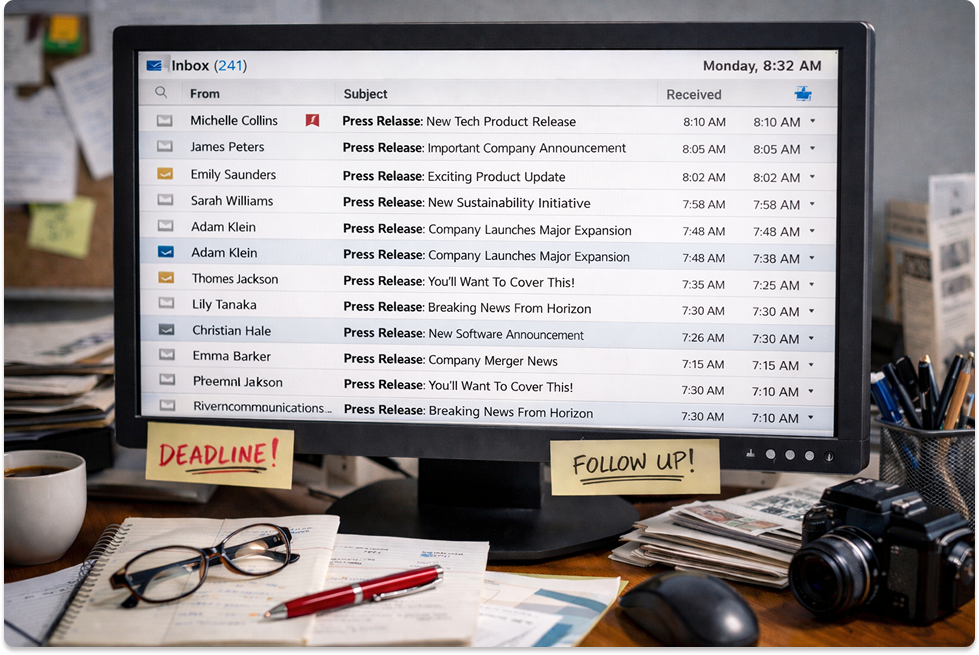
If your press release lands in that pile, it may never get a fair look, even if it is genuinely relevant.
3. Why Friday and Weekends Are Usually a Bad Idea
By Friday, attention starts to shift.
People focus on finishing tasks, closing loops, and getting out the door. New pitches and announcements are often postponed until next week or ignored altogether.
Weekends are even worse.
Many newsrooms run with smaller teams, and most business communication slows down. Unless your news is time-sensitive or tied to a weekend event, sending a press release on Saturday or Sunday usually means it will be buried by Monday’s wave of emails.
If you want a safe default, aim for Tuesday, Wednesday, or Thursday. But, you need to be careful of the timing when you send the press release as well.
When Is the Best Time to Send a Press Release?
There is no single perfect time that works for every industry or every audience, but there are clear patterns you can use as a starting point.
1. The Late Morning to Early Afternoon Window
For many industries, the strongest window is between around 10:00 AM and 2:00 PM.
By this point in the day:
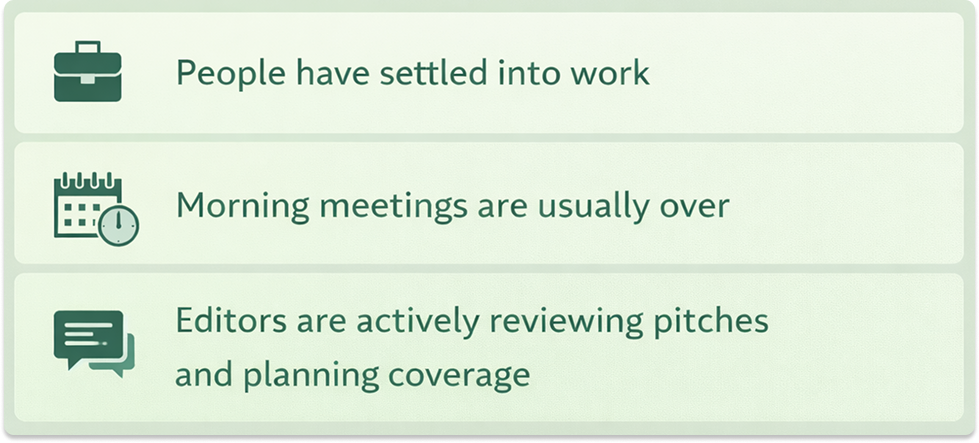
Sending too early, such as before 8:00 AM, often means your email sits at the bottom of the inbox under newer messages. Sending too late in the afternoon means it competes with end-of-day wrap-ups and gets pushed to tomorrow, or forgotten.
2. The Case for Avoiding “On the Hour” Sends
There is another small but useful tactic to consider.
Many PR teams schedule releases exactly on the hour or half-hour, such as 10:00 AM or 12:00 PM. This creates predictable spikes in incoming emails and wire releases.
If you send your press release at a slightly unusual time, such as 11:17 AM or 1:42 PM, you may avoid the peak congestion. Your message does not compete with dozens of others hitting inboxes at the same minute.
This does not guarantee attention, but it can improve your odds in a very crowded environment.
Why “Perfect Timing” Depends on Your Audience and Industry?
General guidelines are helpful, but they are not universal rules. The best timing for your press release depends on:
- Who you are targeting
- What industry you are in
- What kind of news you are sharing
- Which regions or time zones important for you
For example, you run a software company that sells tools to other businesses in the US. Journalists and editors there usually start checking emails in the late morning. Sending your press release around mid-morning US time gives it a better chance to be seen.
Now imagine you are launching a new consumer product in Europe. Editors there are in a different time zone and follow a different daily routine. If you send the release at the same time as the US one, it might arrive late in their day and get missed.
This is why testing matters.
If you send multiple press releases over time, track what gets opened, picked up, or covered. You may find that your audience responds better on certain days or at certain hours that do not match general advice.
Data from your own campaigns is always more valuable than generic benchmarks.
Five Timing Factors Most People Ignore
Day and time are only part of the story. Real-world timing decisions are influenced by several other factors:
1. The News Cycle
Big events, holidays, and major industry moments can drown out smaller announcements.
From late in the year onward, major holidays, sales events, and conferences often dominate coverage.
Take a major event announcement like the Esports World Cup. It draws massive media attention. If your release is unrelated or just a routine update, it is far more likely to get buried and never make it into coverage.

On the other hand, quieter periods in the news cycle can work in your favor.
With less competition, your story has more room to stand out. Tools like Google Trends or social listening platforms can help you spot when attention is high or low around certain topics.
2. Time Zones and Local Work Habits
If you are targeting multiple regions, time zones matter more than you might expect.
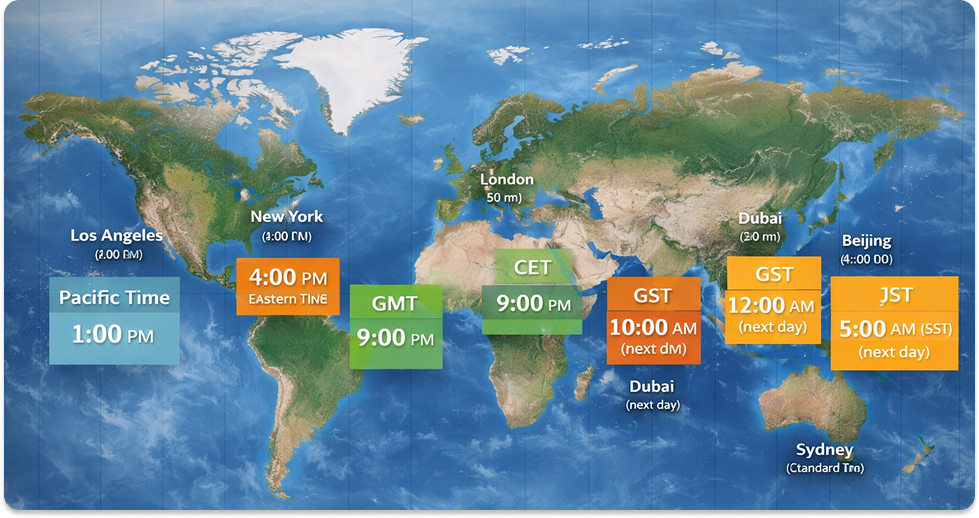
Sending a press release at 9:00 AM in the US could mean it arrives in Europe late in the afternoon, when many people are already wrapping up their day.
The same timing could be completely wrong for Asia or the Middle East.
Local customs also play a role. In some regions, certain days are weekends. In others, workdays may have long midday breaks. If you ignore these patterns, your release can land at exactly the wrong moment.
3. Industry Rules and Compliance Windows
Some sectors have strict rules about when announcements can be made.
Public companies often have quiet periods around earnings. Financial, healthcare, and legal industries may have additional constraints around what can be published and when.
Political announcements also need to consider regulatory and ethical boundaries.
Timing is not just a marketing decision in these cases. It is a compliance issue. Always make sure your schedule fits your industry’s rules.
4. Your Relationship With Editors and Journalists
Strong relationships can change how timing works.
If editors know you consistently send relevant, accurate, and well-prepared news, they are more likely to pay attention, even during busy periods. Some may even tell you when they prefer to receive pitches or when their calendars are less crowded.
A good relationship can give you more flexibility and better feedback on when to send.
5. The Lead Time Your Story Needs
Not every story is meant for immediate publication.
Event announcements, product launches, or major reports often benefit from advance notice. Giving journalists time to plan, research, and prepare coverage increases the chance of meaningful exposure.
As a general guideline, sending a press release at least a week in advance for events or scheduled launches is a smart move. For larger stories, even more lead time can help.
How to Plan the Timing of Your Press Release
One of the most common mistakes in PR is treating distribution as a last-minute task. Good timing starts with planning, not just picking a day on the calendar.
If you know an announcement is coming, build your timeline backward:
- When does the news become public?
- When do you want coverage to appear?
- How much time do editors need to review and prepare?
Scheduling your press release in advance removes stress and gives you room to adjust if something changes. It also lets you choose a time based on strategy, not convenience.
If you are using a distribution service like EdgeNewswire, or working with a PR team, planning ahead also makes it easier to get advice on the best timing for your specific industry or region.
Final Takeaway
There is no magic hour or perfect day that guarantees success. But there are smart defaults, clear patterns, and practical strategies that can dramatically improve your odds.
Midweek usually beats Monday and Friday. Late morning to early afternoon usually beats very early or very late sends. Avoiding peak congestion times can help. Paying attention to news cycles, time zones, industry rules, and lead times makes your timing decisions far more effective.
Most importantly, remember that timing only amplifies what is already there. A well-timed press release still needs a clear story, real news, and strong writing to work.
If you combine good content with thoughtful timing, you give your announcement the best possible chance to be seen, read, and acted on. And in PR, that combination is what turns a simple send button into real results.
Frequently Asked Questions (FAQs)
Q: Should I resend a press release if it gets no response?
A: Yes, but carefully. A polite follow-up or a resend at a better time can help, especially if the first send landed during a busy period. The key is to adjust the timing or angle, not just hit send again with the same approach.
Q: Is it better to send a press release on the same day as my announcement goes live?
A: Not always. For bigger stories, sending it earlier under embargo or with advance notice can give journalists more time to prepare proper coverage. For smaller or time-sensitive news, same-day distribution can make sense.
Q: Do embargoes affect when you should send a press release?
A: Yes. If you are offering an embargoed story, you need to send it early enough for journalists to prepare, but not so early that it gets forgotten. Embargo timing should match the complexity of the story and the outlet’s workflow.
Q: Should I coordinate press release timing with social media or email campaigns?
A: Ideally, yes. Aligning your press release with your other channels can amplify visibility and keep your message consistent. However, the press release should still be timed for media workflows first, not just marketing schedules.
Q: How do I know if my timing strategy is improving?
A: Track simple signals over time, such as opens, replies, pickups, and coverage quality. Compare performance across different days and times. Patterns in your own data are more useful than any generic rule.