




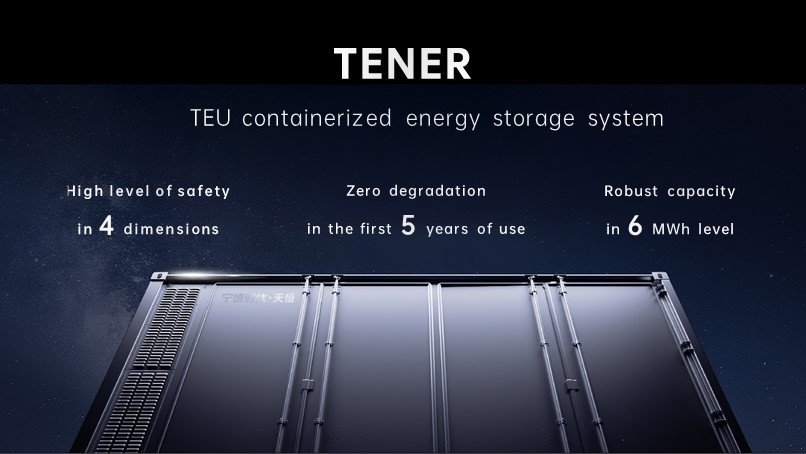
April 9, 2024 -- On April 9, CATL unveiled TENER, the world's first mass-producible energy storage system with zero degradation in the first five years of use in Beijing, China. Featuring all-round safety, five-year zero degradation and a robust 6.25 MWh capacity, TENER will accelerate large-scale adoption of new energy storage technologies as well as the high-quality advancement of the sector.
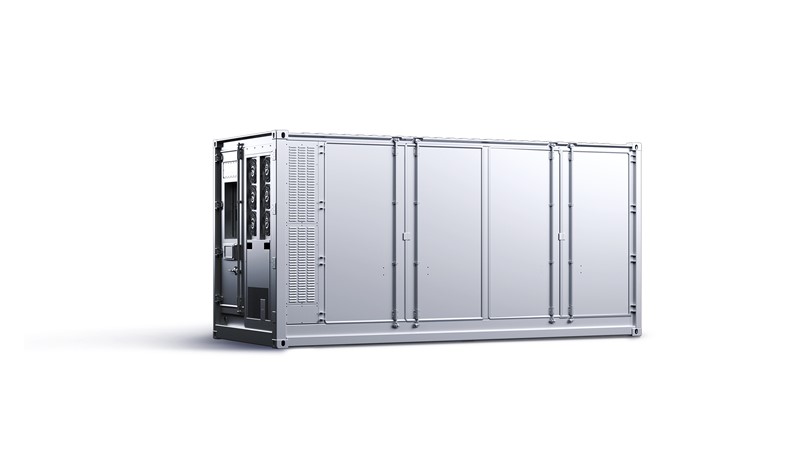
World's First Mass-producible 5-year Zero Degradation System
While preventing the degradation of capacity over the first five years of use is a significant advancement in increasing the lifespan of batteries, the zero degradation of power is also important for energy storage power plants aiming to meet the requirements of new electric power systems. Leveraging biomimetic SEI (solid electrolyte interphase) and self-assembled electrolyte technologies, TENER has cleared roadblocks for the movement of lithium ions and achieved zero degradation for both power and capacity, ensuring zero growth of auxiliary power consumption throughout full life cycle, thereby creating "ageless" energy storage system.
Powered by cutting-edge technologies and extreme manufacturing capabilities, CATL has resolved the challenges caused by highly active lithium metals in zero-degradation batteries, which effectively helps prevent thermal runaway caused by oxidation reaction.
Immense Energy in a Compact Space: 20-foot Container with 6.25 MWh Capacity

TENER achieves an impressive 6.25 MWh capacity in the TEU container, representing a 30% increase in energy density per unit area and a 20% reduction in the overall station footprint, thus enhancing energy density and efficiency through innovative design within a limited space.
In brief
CATL unveiled TENER, an energy storage system, in Beijing, China, on April 9, 2024. The company says the system is designed to maintain both power and capacity without degradation during its first five years of use. TENER has a stated capacity of 6.25 MWh in a 20-foot container, and CATL reports that its design increases energy density per unit area by 30% while reducing station footprint by 20%. The system uses cells with an energy density of 430 Wh/L. CATL also describes a safety management approach spanning development, testing, operation monitoring and failure analysis, including AI-based risk monitoring after deployment. The company says the cell failure rate has been reduced to the PPB level. It presents TENER as part of its work on energy storage and the broader energy transition.
Key takeaways
- CATL says TENER is designed for zero power and capacity degradation during its first five years of use.
- The system has a stated capacity of 6.25 MWh in a 20-foot container.
- CATL reports a 30% increase in energy density per unit area and a 20% reduction in station footprint.
- The company says TENER cells have a failure rate at the PPB level.

CATL's cutting-edge cell technology supports the outstanding performance of the system. TENER is equipped with long service life and zero-degradation cells tailored for energy storage applications, achieving an energy density of 430 Wh/L, an impressive milestone for LFP batteries used in energy storage.
Dedicated quality management system to ensure ultimate safety
To achieve ultimate safety in energy storage, CATL has established a dedicated, end-to-end quality management system that includes technology development, proof testing, operation monitoring, and safety failure analysis. It sets different safety goals as required by different scenarios, and then develop the corresponding safety technology to meet those goals. In order to ensure the effectiveness of such technologies, CATL has built a validation platform to simulate the safety test of energy storage systems in different power grid scenarios. After the project is put into operation, CATL continuously monitors its operation status through AI-powered risk monitoring and intelligent early warning, calculates the failure rate of energy storage products throughout their life cycle, and thus verify the safety design goals and continue optimizing them.
CATL has reduced the failure rate to the PPB level for cells used in TENER, which, when extended to the operation throughout its full lifecycle, can effectively lower operating costs and significantly enhance IRR (internal rate of return).
Energy storage is a pivotal element of the green energy transition. CATL has steadfastly dedicated itself to delivering world-class energy storage solutions for customers around the world. The unveiling of TENER signifies another milestone in CATL's ongoing commitment to energy transition. Looking ahead, CATL will remain resolute in its pursuit of open innovation and collaborate with global industry partners to forge a path of mutual prosperity as an industry leader in innovation and advanced technology.
If you detect any issues, problems, or errors in this press release content, kindly contact [email protected] to notify us (it is important to note that this email is the authorized channel for such matters, sending multiple emails to multiple addresses does not necessarily help expedite your request). We will respond and rectify the situation in the next 8 hours.
At a glance
- Company
- CATL
- Announcement
- Product
- Location
- Beijing, China
Key figures
- Zero-degradation period
- five years
- System capacity
- 6.25 MWh
- Increase in energy density per unit area
- 30%
- Reduction in station footprint
- 20%
- Cell energy density
- 430 Wh/L
- Cell failure rate
- PPB level
Products and programs
Earlier from CATL
- CATL Founder Calls for Greater Collaboration to Solve Climate Change
- Enabling a successful EV transition through innovation and sustainability: Robin Zeng
- Avoiding a crunch in critical minerals through technology, recycling and global collaboration: Robin Zeng
- CATL partners with China Mobile to establish information energy joint institute
- CATL's Shenxing battery wins the AUTOBEST 2024 award
