




World's largest EV battery manufacturer opens up technology to accelerate green transition
March 25, 2024 -- CATL, a global leader in new energy technology, today called for more open innovation between businesses and countries in a bid to solve the challenge of climate change. Speaking at the One Earth Summit in Hong Kong, Dr. Robin Zeng, Chairman and CEO of CATL, announced that CATL is poised to share its technology and its Zero Carbon practices to anyone committed to accelerating the transition to green energy, electric transportation, and a circular economy – including competitors.
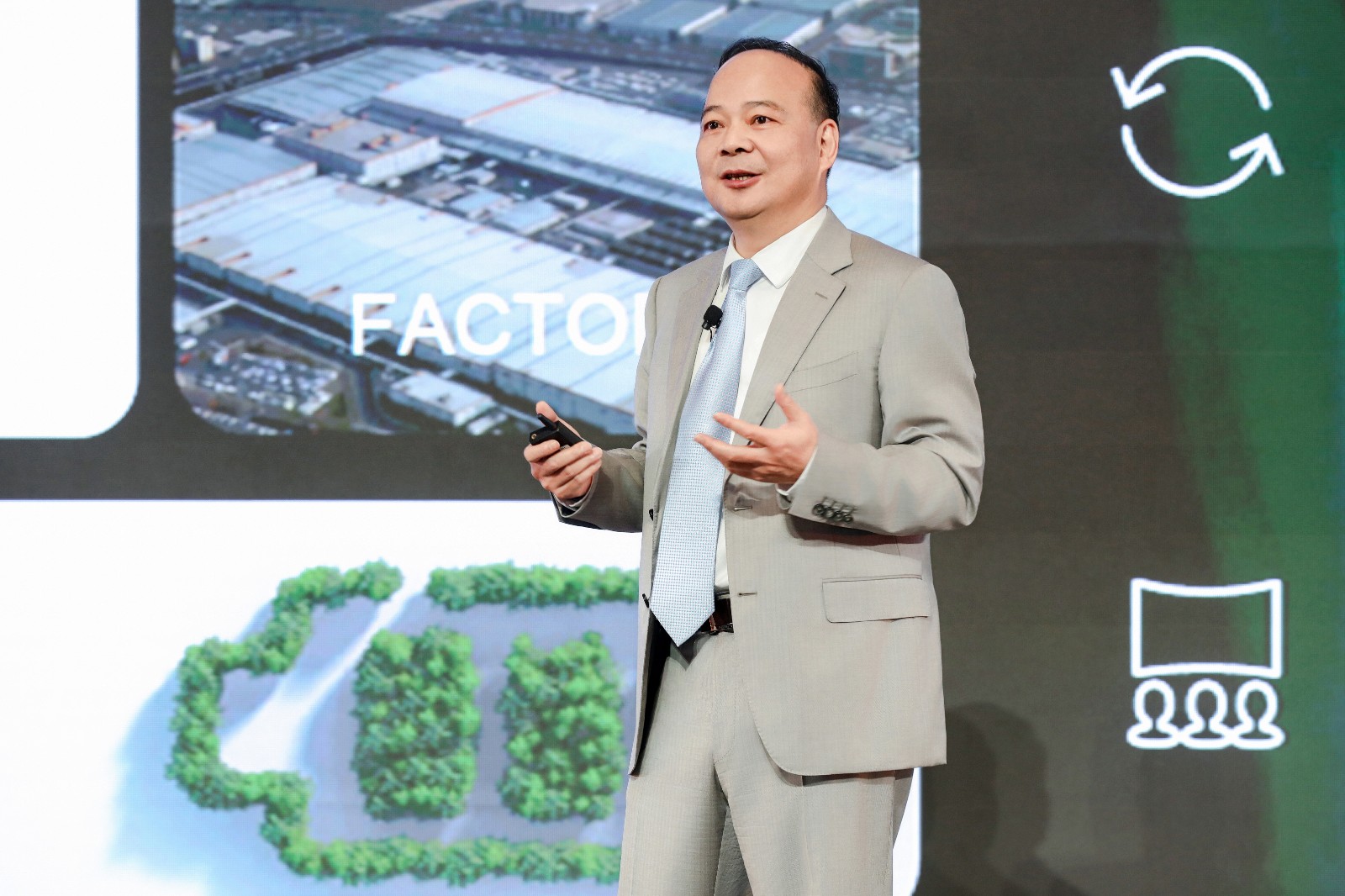
"Now, more than ever, we must work together if we are to solve humanity's biggest problems, such as climate change," said Dr. Zeng. Continuous technological advancement is the key to achieving sustainability, Dr. Zeng said.
He highlighted the investment CATL has made in research and development to maintain its position as the world's number one battery technology company. It now has more than 20,000 R&D staff worldwide and spent US$2.59bn on R&D in 2023. Its nearly 30,000 issued and pending patents worldwide cover a wealth of breakthrough technologies including the world's first 4C superfast-charging LFP battery which can deliver a range of 400km with just a 10-minute charge and the Qilin battery which can deliver 1,000km range on a single charge.
In brief
CATL Chairman and CEO Robin Zeng called for companies and countries to collaborate more openly on climate change, saying the company is willing to share technology and zero-carbon practices with interested organizations, including competitors. At the One Earth Summit in Hong Kong, he cited CATL’s research investment, battery technologies, manufacturing and recycling efforts. The company says it has more than 20,000 research and development staff and spent US$2.59 billion on R&D in 2023. It also reported recycling more than 100,000 tons of battery waste that year. CATL says four of its factories are already zero-carbon and has set carbon-neutrality goals for its core operations and supply chain. Zeng also described potential applications including electric unmanned mines, battery swapping and using EVs to support power grids.
Key takeaways
- CATL says it is willing to share its technology and zero-carbon practices with organizations committed to the green transition.
- The company reported US$2.59 billion in R&D spending and more than 20,000 R&D staff worldwide.
- CATL says it recycled over 100,000 tons of battery waste in 2023, with 90% recovery efficiency.
- The company has carbon-neutrality goals for its core operations by 2025 and its supply chain by 2035.
Dr. Zeng outlined the significant steps CATL has taken to reduce its carbon emissions. Its four factories are already Zero Carbon, and all three facilities in the battery industry recognized by the World Economic Forum are CATL facilities. The company has also pledged to be carbon neutral in its core operations by 2025, and to ensure its supply chain is carbon neutral by 2035.
The company has also taken significant strides in its recycling. In 2023, it recycled over 100,000 tons of battery waste. With its 90% recovery efficiency, it was able to recover 13,000 tons of lithium carbonate, vastly reducing the volume of mining needed and accelerating its contribution to the circular economy.
"I think of our sustainability efforts as a single tree, but we have an ambition to create a forest," said Dr. Zeng. "We are willing to work with businesses, governments, investors and anyone interested in accelerating climate action. Together, to extend the Zero Carbon practice from factories to communities, cities, and more."
In his speech, Dr. Zeng outlined three key benefits of open innovation:
• Bridges technological divide: CATL shares its battery technology through its LRS (licensing, royalty, service) model and supports OEM partners with the construction and operation of battery plants. This helps them accelerate their operations, fast-tracking green energy transition.
• Unlocks new, zero carbon scenarios: CATL is developing new ways to use battery technology to advance sustainability. For example, it is working with its network of partners on electric, unmanned mines, and battery swapping for both passenger cars and heavy-duty trucks.
• Creates sustainable ecosystems: In the near future, EVs could become distributed energy storage facilities, helping provide and regulate gigawatts of power to grids. EV owners could even benefit financially, selling power to the grid at peak times.
"We have seen countries and businesses dial back their net zero commitments at a time when we need to accelerate them," continued Dr. Zeng. "We must unite like never before to tackle our most pressing challenges, and I believe open innovation is the key to supercharging the green energy transition."
If you detect any issues, problems, or errors in this press release content, kindly contact [email protected] to notify us (it is important to note that this email is the authorized channel for such matters, sending multiple emails to multiple addresses does not necessarily help expedite your request). We will respond and rectify the situation in the next 8 hours.
At a glance
- Company
- CATL
- Location
- Hong Kong
Key figures
- R&D staff worldwide
- more than 20,000
- R&D spending in 2023
- US$2.59bn
- Issued and pending patents
- nearly 30,000
- Battery waste recycled in 2023
- over 100,000 tons
- Battery recycling recovery efficiency
- 90%
- Recovered lithium carbonate
- 13,000 tons
People
- Dr. Robin ZengChairman and CEO of CATL
Products and programs
Earlier from CATL
- Enabling a successful EV transition through innovation and sustainability: Robin Zeng
- Avoiding a crunch in critical minerals through technology, recycling and global collaboration: Robin Zeng
- CATL partners with China Mobile to establish information energy joint institute
- CATL's Shenxing battery wins the AUTOBEST 2024 award
