




SEPANG, October 23, 2024 -- YB Loke Siew Fook, Minister of Transport said: "I commend AirAsia for being the first airline in Malaysia to adopt the Combo units. This is among in-sector solutions that airlines can already undertake to reduce carbon emissions and enhance efficiency at our airports as highlighted in the Malaysia Aviation Decarbonisation Blueprint.

 From (L-R) Kesavan Sivanandam, Chief Airport and Customer Experience Officer of AirAsia; Yap Mun Ching, Chief Sustainability Officer of Capital A; YB Loke Siew Fook, Minister of Transport Malaysia; Dato’ Captain Fareh Mazputra, Managing Director of AirAsia Malaysia; Mohit Khatri, Head of Ground Operations Project of AirAsia and Fazrul Khan, Duty Manager, Ground Operations Projects of AirAsia.
AirAsia today announced a new initiative to cut carbon emissions at airports through the introduction of cutting-edge ground support technology at its main hub at the Kuala Lumpur International Airport (KLIA) Terminal 2.
At an event attended by Minister of Transport, YB Loke Siew Fook, AirAsia and Smart Airport Systems (SAS)* demonstrated the use of Combo Units, an advanced airport ground equipment that offers dual-functionality of a Ground Power Unit (GPU) and an Air Condition Unit (ACU) to provide for the electrical and air-cooling needs of an aircraft while it is stationary on ground before a flight and during transit. Without adequate ground power and a performing ACU, an aircraft relies on the use of its auxiliary power unit (APU)** to perform the same functions but this is cost and carbon-inefficient because APUs are powered by aviation turbine fuel.
The Combo units are part of SAS’ innovative range of high-performance ground support equipment to provide airlines with solutions to reduce on-ground fuel use and carbon emissions. Through this substitution, AirAsia is expected to significantly reduce APU costs and associated CO2 emissions by 90% at optimal usage, contributing significantly to lowering the airline’s Scope 1 emissions from ground operations. According to Malaysia Airports Holdings Berhad’s (MAHB) Annual Report 2023, aircraft emissions contributed 53% of total CO2 emissions at airports, out of which 23% is attributed to APU usage. Other major contributors to total ground emissions are airport buildings and airport travel.
In brief
AirAsia has started an “APU Off” initiative at Kuala Lumpur International Airport Terminal 2, using Combo Units supplied by Smart Airport Systems. The equipment combines ground power and air conditioning to support aircraft while they are parked, allowing the airline to reduce reliance on fuel-powered auxiliary power units. AirAsia says the units could cut associated APU costs and CO2 emissions by 90% at optimal usage. The airline is deploying its first four units this month and expects to add more at Terminal 2 and major domestic hubs by the end of 2025. At full implementation, the company expects the equipment to reduce its ground-based emissions by 20,000 tonnes of CO2 annually. The launch was attended by Malaysia’s transport minister, YB Loke Siew Fook.
Key takeaways
- AirAsia is deploying Combo Units at Kuala Lumpur International Airport Terminal 2 to provide aircraft with ground power and cabin cooling.
- The airline says the equipment could reduce APU-related costs and CO2 emissions by 90% at optimal usage.
- AirAsia expects to expand deployment to major domestic hubs by the end of 2025.
- At full implementation, the airline expects annual ground-emissions reductions of 20,000 tonnes of CO2.
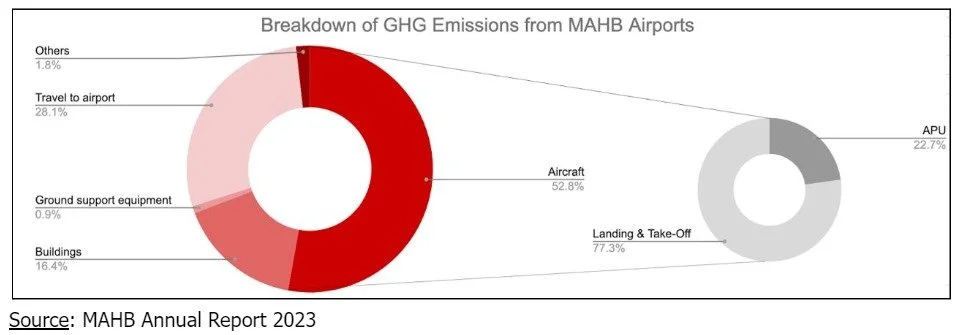
“As APU emissions make up 12% of reported airport emissions, today’s launch represents a significant step towards tackling on-ground emissions. I hope to see all airlines and ground handling operators adopt this technological innovation as a new benchmark to strengthen Malaysia’s position as a regional leader in sustainable aviation.”
Kesavan Sivanandam, Chief Airport and Customer Experience Officer of AirAsia Aviation Group said: “These energy-efficient Combo units unlock a major opportunity for airlines like AirAsia to decarbonise because we operate in countries with high humidity. Previously, we had been unable to make the switch because conventional GPUs lack cabin cooling functions which are necessary for the comfort of our guests.”
Kesavan said that the adoption of SAS’ Combo Units technology underscores AirAsia’s commitment to sustainability and represents the adoption of a measure identified in the Ministry of Transport’s Aviation Decarbonisation Blueprint published last month. Under its Airport Measures section, the MADB calls for all airlines operating at Malaysian airports to be provided with facilities and options to utilise GPUs and Pre-Conditioned Air units during transit and when performing aircraft servicing activities.
Amaury Papillault, Regional Director of Smart Airport System (SAS) said: “For more than 20 years SAS has been a pioneer in the implementation of effective APU OFF initiatives and we are delighted to partner with AirAsia on its journey to reduce its carbon footprint on the ground. The airline community has long recognised the role that turning off APUs can play in effectively reducing aircraft ground emissions. With these easy-to-deploy Combo units, cutting APU emissions becomes a low-hanging fruit that all airlines can adopt as part of their decarbonisation programmes.”
Papillault said the switch to Combo Units also helps improve working conditions for ground technicians and handlers as it leads to less air and noise pollution, notably from jet fumes generated by APUs.
During a live demonstration with the Minister of Transport, SAS showed that it took less than two minutes to connect and activate the Combo units upon an aircraft's arrival at the gate during transit.
AirAsia is deploying its first four Combo units from SAS starting this month. The airline expects to introduce additional units at KLIA Terminal 2, and all major domestic hubs by the end of 2025. Upon full implementation, the Combo units are expected to reduce AirAsia’s ground-based emissions by 20,000 tonnes of CO2 per year.
*Smart Airport Systems (SAS) is part of the Alvest Group, the worldwide leader in aviation ground support equipment. Its zero-ground emissions initiatives aim to reduce noise and polluting emissions at airports.
** An Auxiliary Power Unit (APU) is a small jet engine located typically in the tail section of an aircraft that uses the aircraft’s fuel to generate electrical and hydraulic power, as well as cabin air conditioning when the main engines are not running.
If you detect any issues, problems, or errors in this press release content, kindly contact [email protected] to notify us (it is important to note that this email is the authorized channel for such matters, sending multiple emails to multiple addresses does not necessarily help expedite your request). We will respond and rectify the situation in the next 8 hours.
At a glance
- Company
- AirAsia
- Announcement
- Product
- Location
- Sepang, Malaysia
Key figures
- Initial Combo Units
- four
- Potential reduction in APU costs and associated CO2 emissions at optimal usage
- 90%
- Expected annual ground-based emissions reduction at full implementation
- 20,000 tonnes of CO2 per year
- Expected expansion timing
- by the end of 2025
People
- YB Loke Siew FookMinister of Transport Malaysia
- Kesavan SivanandamChief Airport and Customer Experience Officer of AirAsia Aviation Group
- Amaury PapillaultRegional Director of Smart Airport Systems
Products and programs
Earlier from AirAsia
- AirAsia aims to fly more than two million guests to Sabah in 2024, supporting the state’s target of four million arrivals
- AirAsia joins hand with the Mirror Foundation in “Flying for Relief” this 15-31 October
- AirAsia celebrates guests onboard AirAsia X SEGA Sonic the Hedgehog flight in style!
- AirAsia to host first ever ‘Barter For Better” flights promotion go somewhere new with Asia’s low cost leader
- AirAsia ambitious to propel Kuala Lumpur as the world’s leading aviation megahub and Asean as the next Dubai
