




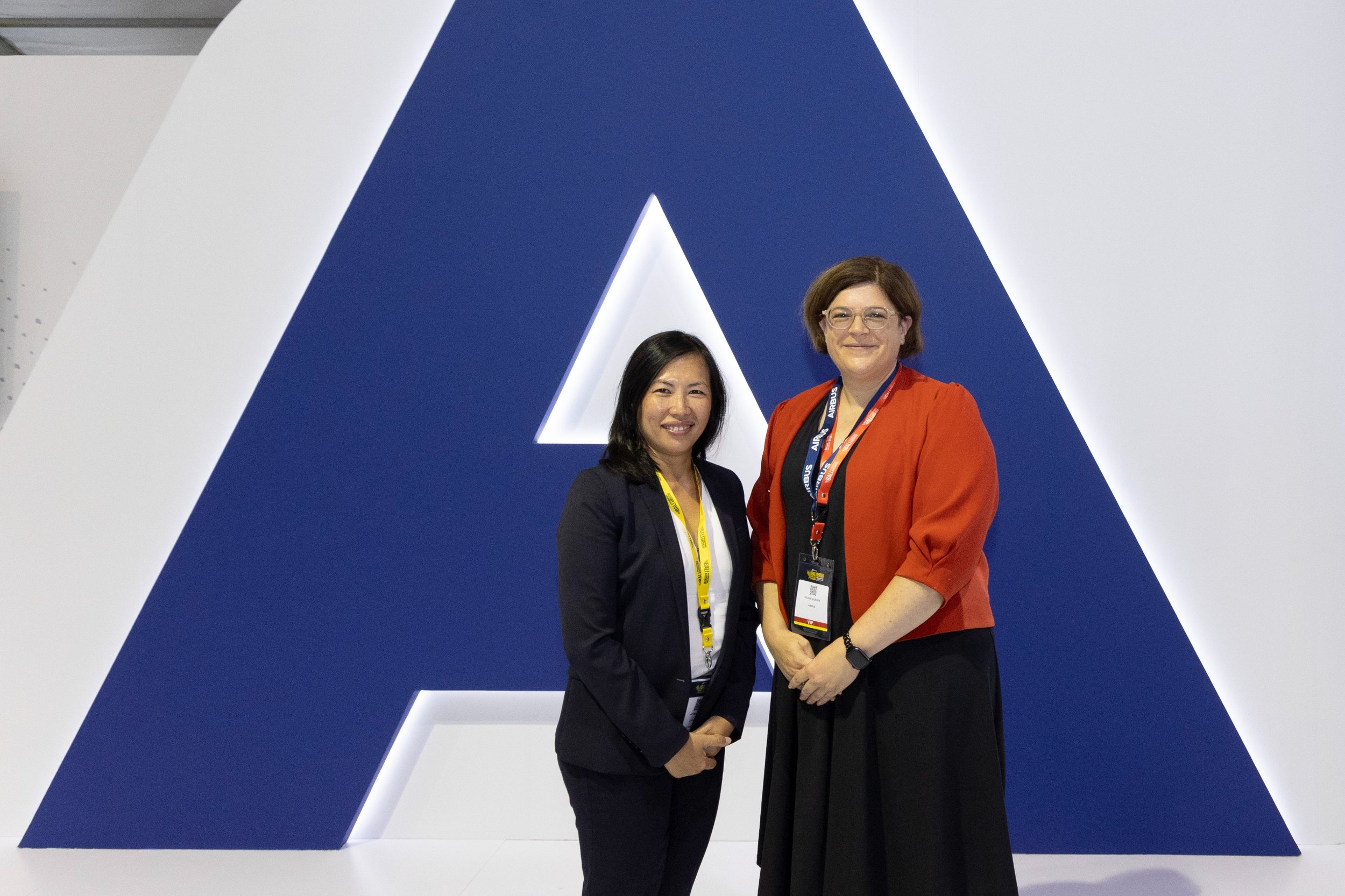
DENPASAR, September 20, 2024 -- Yap Mun Ching, Chief Sustainability Officer, Capital A (L) and Helene Burger, Head of International Cooperation & Sustainability APAC, Airbus
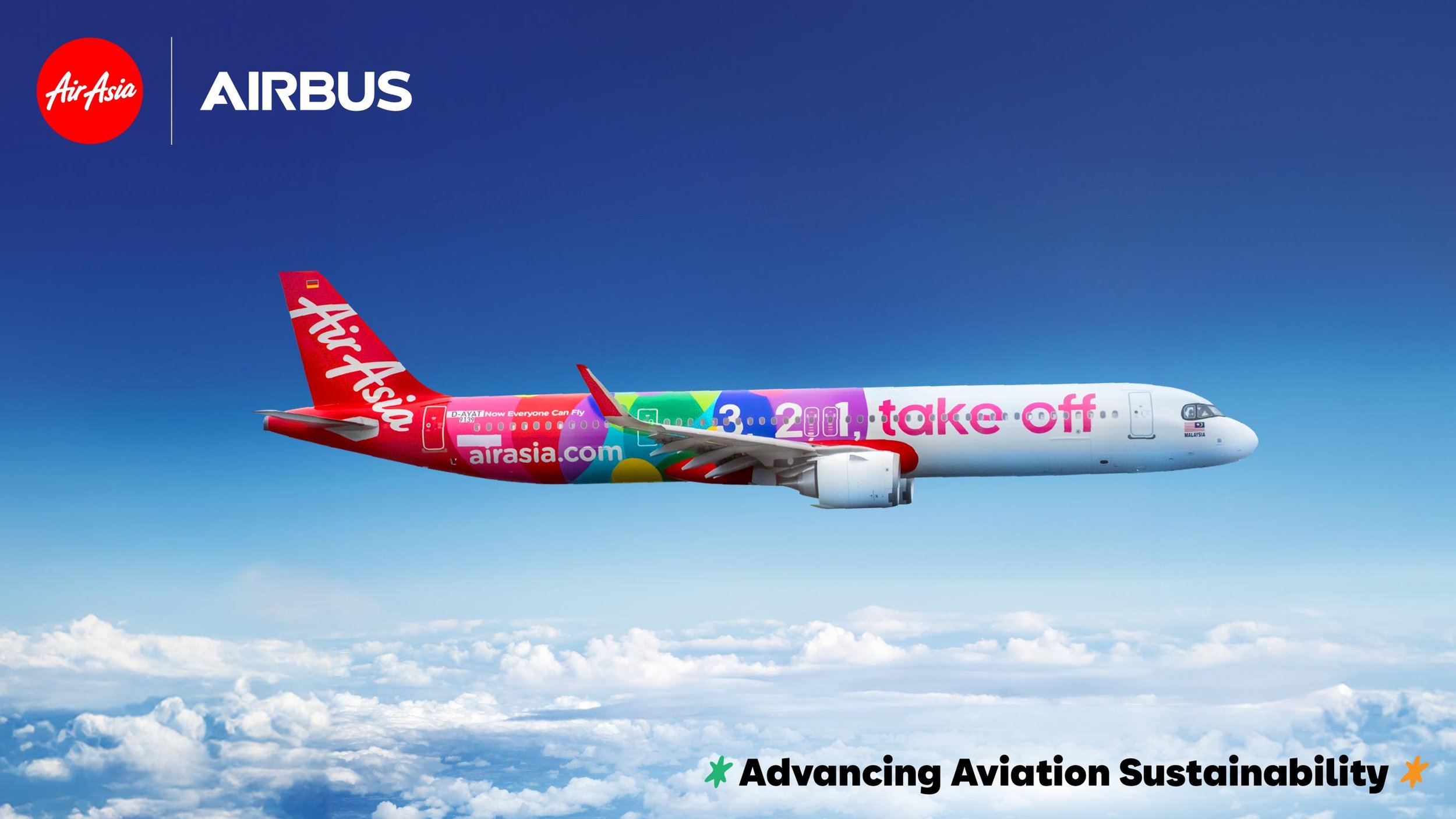
AirAsia today announced a new chapter in its long-term partnership with European aircraft manufacturer Airbus to advance research into aviation sustainability initiatives that lower carbon emissions in the ASEAN region.
In a Memorandum of Understanding between their sustainability divisions, AirAsia and Airbus established a collaboration to explore decentralised production of Sustainable Aviation Fuel (SAF) using alternative feedstock and technologies in Southeast Asia. The research-based partnership aims to identify opportunities to support the onward commercial development of promising projects to expand SAF supply in the region.
The MoU also set forth conditions to jointly investigate advanced measures to improve air traffic management (ATM) to reduce CO2 emissions, leveraging AirAsia’s industry-leading fuel efficiency programme and Airbus’ pioneering role as a global leader in aeronautics, space and related services. The organisations will be identifying applicable solutions developed as part of the Single European Sky ATM Research (SESAR) Project* and assessing their suitability for adaptation to ASEAN skies.
Capital A Chief Sustainability Officer, Yap Mun Ching said, “AirAsia will be a key partner of Airbus in ASEAN to test the feasibility of SAF output developed using alternative feedstock and technologies, as well as ground-breaking ATM initiatives supported by Airbus’ innovation teams. As a regional carrier based in five ASEAN countries, we bring unparalleled operational experience in the region to complement Airbus’ technological expertise. The partnership establishes a foundation upon which to build joint projects at multiple levels that address the broad needs of improving the environmental performance of the sector.”
At a glance
- Company
- AirAsia and Airbus
- Announcement
- Partnership
- Location
- Denpasar
Key figures
- SAF share in AirAsia deliveries starting 2024
- 5%
- AirAsia A321 model order
- 361 units
- Expected emissions reduction from aircraft upgrades by 2035
- up to 10%
- Expected reduction from operational efficiencies and SAF
- 15%
- CO2 emissions avoided through 2023 operational measures
- 130,000 tonnes
- Fuel cost reduction from operational measures
- US$40 million
People
- Yap Mun ChingChief Sustainability Officer, Capital A
- Helene BurgerHead of International Cooperation & Sustainability APAC, Airbus
- Julie KitcherChief Sustainability Officer, Airbus
Products and programs
Yap said the partnership directly addresses the prerogative for the aviation sector to invest in and scale up in-sector solutions that are critical to decarbonising the industry. Other than improvements in efficiency and adoption of SAF, she said a key pathway for AirAsia to achieve net zero by 2050 is by upgrading the airline’s fleet to the most fuel-efficient models.
In June, AirAsia took delivery of its first brand new A321neo aircraft since the Covid-19 pandemic. The airline will receive five more aircraft in the fourth quarter of the year for entry into service in Malaysia and Thailand. All Airbus aircraft deliveries to AirAsia starting 2024 will be fulfilled using a fuel blend inclusive of 5% SAF.
Airbus Chief Sustainability Officer, Julie Kitcher said, “Airbus is contributing to the decarbonisation of aviation around the world. That means working with our customers in every region, looking at all solutions available today and collaborating on research for future technologies. AirAsia is a key partner in the ASEAN region and we are excited to work with the airline to explore operational efficiency levers, including air traffic management and scaling up the production and distribution of SAF.”
AirAsia currently holds an order for 361 units of the A321 model to meet the airline group’s fleet growth and replacement needs. By 2035, aircraft upgrades are expected to account for up to 10% reduction in AirAsia’s CO2 emissions compared to its 2019 baseline. Operational efficiencies and SAF are expected to deliver another 15% in reduction as the airline group charts its pathway towards net zero by 2050.
In 2023, AirAsia avoided emitting 130,000 tonnes of CO2 from its narrowbody regional network through the implementation of over 20 operational efficiency measures, equivalent to the impact of more than 2 million trees planted**. These measures contributed to a reduction in fuel costs amounting to US$40 million and over US$388,000 in shadow carbon costs.
*SESAR is the technological pillar of the EU’s Single European Skies initiative aimed at modernising Europe’s air and ground ATM infrastructure and procedures to enhance safety, cost-efficiency and environmental performance. Launched in 2004, more than €2 billion has been committed to the development phase of SESAR’s ambitious goals.
**United States Environmental Protection Agency, ‘Greenhouse Gases Equivalencies Calculator - Calculations and References: Number of urban tree seedlings grown for 10 years'.
If you detect any issues, problems, or errors in this press release content, kindly contact [email protected] to notify us (it is important to note that this email is the authorized channel for such matters, sending multiple emails to multiple addresses does not necessarily help expedite your request). We will respond and rectify the situation in the next 8 hours.
In brief
AirAsia and Airbus have signed a memorandum of understanding to study ways to advance aviation sustainability in Southeast Asia. The companies plan to examine decentralised production of sustainable aviation fuel using alternative feedstocks and technologies, and assess whether air traffic management solutions developed through Europe’s SESAR project could be adapted for ASEAN skies. AirAsia says the collaboration will combine its regional operating experience with Airbus’ technical expertise. The release also describes AirAsia’s fleet and operating measures: the airline received its first new A321neo since the pandemic in June and expects five more in the fourth quarter. AirAsia says fleet upgrades, operational efficiencies and sustainable aviation fuel are part of its pathway toward net zero by 2050. It also reports that efficiency measures avoided 130,000 tonnes of CO2 emissions in 2023.
Key takeaways
- The MoU covers research into regional sustainable aviation fuel production and air traffic management improvements.
- The companies will assess whether SESAR-developed solutions could be adapted for ASEAN skies.
- AirAsia expects five additional aircraft deliveries in the fourth quarter of 2024.
- AirAsia says its 2023 operational measures avoided 130,000 tonnes of CO2 emissions.
