




Lunit’s AI-powered biomarker, Lunit SCOPE PD-L1 TPS, integrates into Roche’s navify® Digital Pathology platform to enhance precision medicine and improve cancer biomarker testing
September 10, 2024 -- ▲ Lunit SCOPE PD-L1 22C3 TPS integrated into Roche's navify® Digital Pathology platform, showcasing more accurate and efficient AI-powered PD-L1 TPS scoring. (Image credit: Lunit)
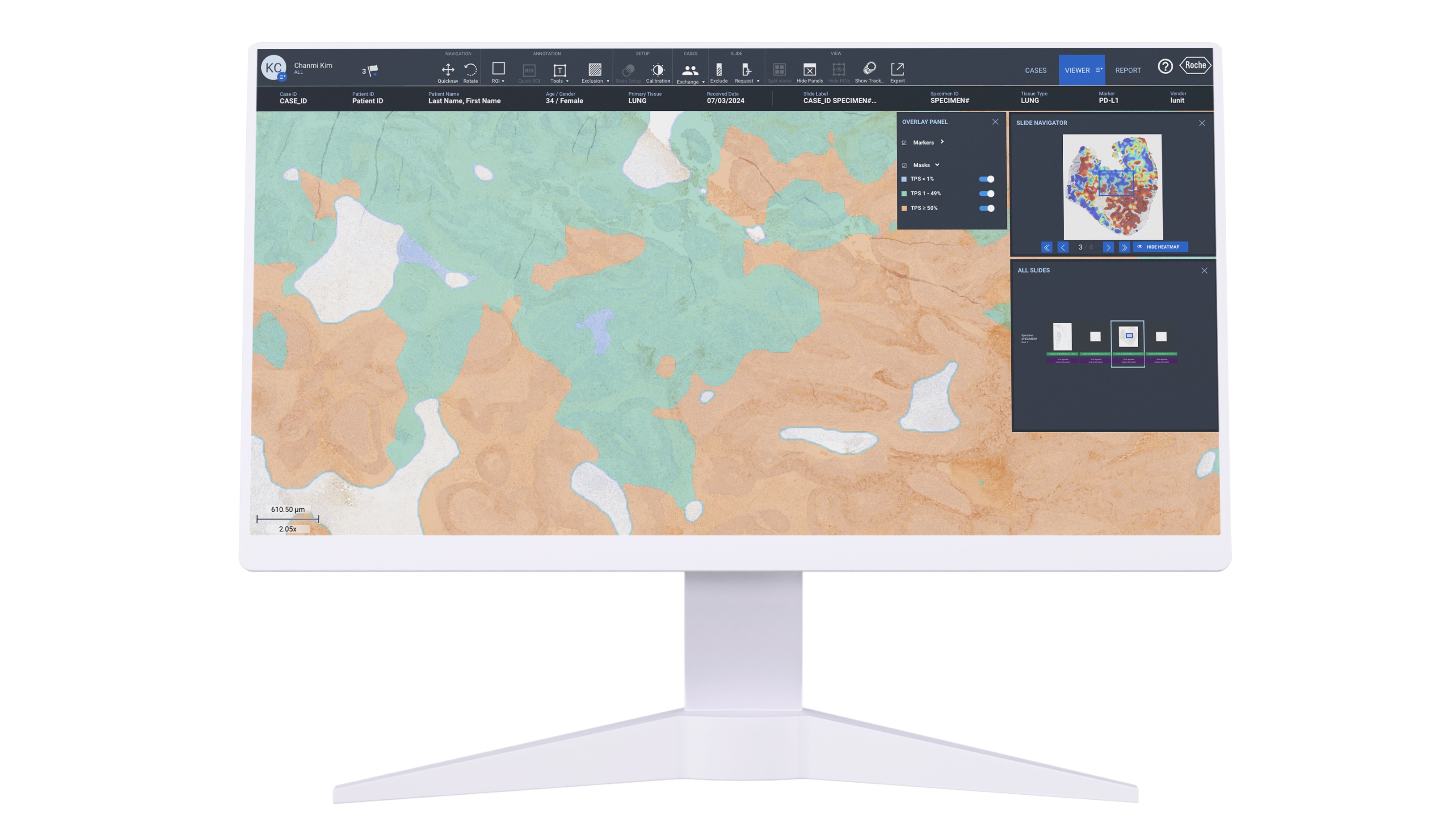
Lunit, a leading provider of AI-powered solutions for cancer diagnostics and therapeutics, today announced its collaboration with Roche to integrate Lunit SCOPE PD-L1 22C3 TPS into Roche's navify® Digital Pathology platform. This marks the first deployment of Lunit's AI technology with Roche, supporting pathologists and scientists with enhanced tools for cancer research as part of Roche's initiative to create a collaborative digital pathology ecosystem.
Roche's navify® Digital Pathology is an enterprise software application designed for the pathologist's workflow. It now incorporates a range of AI-driven algorithms, including Lunit SCOPE, creating easy access to external innovation. The integrations aim to offer a comprehensive suite of digital pathology tools that enhance biomarker testing for cancer research and improve patient outcomes through precision medicine.
At a glance
- Company
- Lunit
- Announcement
- Partnership
People
- Brandon SuhCEO of Lunit
Products and programs
The collaboration spans significant global territories, starting with the US, with future expansion targeted for Canada, the EU (UK), Korea, and Japan, underscoring the strategic intent to enhance cancer diagnostics and treatment across diverse healthcare markets.
Lunit SCOPE PD-L1 22C3 TPS is an AI-powered tool that provides high-value insights and analysis of the PD-L1 tumor proportion score (TPS), a critical biomarker in cancer immunotherapy. By automating the PD-L1 scoring process, it provides more accurate, consistent, and efficient assessments of PD-L1 TPS scoring, a particularly challenging biomarker.
Lunit SCOPE PD-L1 has been available for research use only since 2021. This new accessibility in the Roche navify platform is designed to maximize access to this leading-edge AI.
"We're thrilled to work together with Roche within its open digital pathology ecosystem, which we believe will create powerful synergies and represent a significant step toward making Lunit's AI tools accessible globally," said Brandon Suh, CEO of Lunit.
"Today, we have made PD-L1 analysis available, and we look forward to sharing more of our tools on this platform in the future. By integrating our precise and reliable algorithms, we aim to accelerate the advancement of precision medicine, enhancing workflow efficiency and introducing new biomarkers for improved patient care."
Lunit SCOPE PD-L1 TPS is for research use only, and is not for use in diagnostic procedures.
If you detect any issues, problems, or errors in this press release content, kindly contact [email protected] to notify us (it is important to note that this email is the authorized channel for such matters, sending multiple emails to multiple addresses does not necessarily help expedite your request). We will respond and rectify the situation in the next 8 hours.
In brief
Lunit says it is working with Roche to make its Lunit SCOPE PD-L1 22C3 TPS tool available through Roche’s navify® Digital Pathology platform. The integration is the first deployment of Lunit’s AI technology with Roche and is intended to give pathologists and scientists access to additional tools for cancer research. Lunit describes the software as automating analysis of the PD-L1 tumor proportion score, a biomarker used in cancer immunotherapy. The tool has been available for research use only since 2021, and Lunit reiterates that it is not for diagnostic procedures. The collaboration will begin in the US, with potential expansion to Canada, the EU (UK), Korea and Japan. Lunit CEO Brandon Suh said the company plans to make additional tools available on the platform.
Key takeaways
- Lunit’s Lunit SCOPE PD-L1 22C3 TPS is being integrated into Roche’s navify® Digital Pathology platform.
- The companies’ collaboration will initially cover the US, with further markets targeted for expansion.
- Lunit says the tool automates PD-L1 tumor proportion score analysis.
- The product is for research use only and is not intended for diagnostic procedures.
Earlier from Lunit
- Immune Phenotyping Identified as Promising Predictive Biomarker by Lunit AI in Biliary Tract Cancer - New publication in CCR
- Lunit's AI for Tuberculosis Detection Tops in 12-Product Comparative Study
- Lunit's AI Solution Enhances Qatar's National Breast Cancer Screening Program
- Lunit Appoints Volpara CEO Teri Thomas as Chief Business Officer of Cancer Screening Group
- Lunit to Showcase 7 Studies at ASCO 2024, including AI Innovations in HER2 Quantification, and Multimodal Predictive Models for Immunotherapy Response
