




At a glance
- Company
- FUJIFILM Holdings Corporation
- Announcement
- Partnership
- Location
- Japan
Key figures
- Participating Fujifilm Group cafeterias in Japan
- 29
- FRY to FLY Project participants as of January 2026
- 295
- Potential lifecycle CO2 emissions reduction from SAF
- about 60 to 80%
- Start of used cooking oil supply
- June 2024
Products and programs
Supplying used cooking oil collected from all employee cafeterias in Japan to support the production of Sustainable Aviation Fuel(SAF)
February 11, 2026 -- FUJIFILM Holdings Corporation today announced its participation in the “FRY to FLY Project,” a collaborative initiative that aims at creating a future where aircraft fly using Sustainable Aviation Fuel (SAF)*1 made from domestic resources, specifically waste cooking oil generated by households and businesses. In cooperation with cafeteria management companies, FUJIFILM Holdings collects used cooking oil from all employee cafeterias across the Fujifilm Group in Japan*2 and supplies it to the FRY to FLY Project to support the production of SAF.
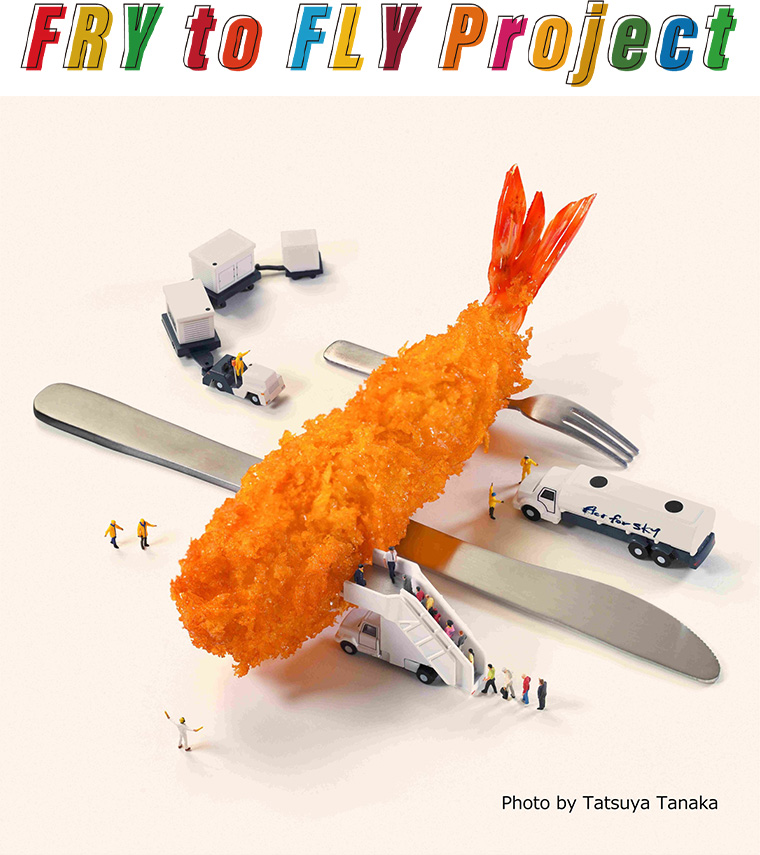
Provided by JGC Holdings Corporation
FUJIFILM Holdings began supplying used cooking oil from the employee cafeteria at the Yokohama Minato Center of FUJIFILM Business Innovation in June 2024. As the initiative aligns strongly with the Fujifilm Group’s environmental priority issues – such as addressing climate change and promoting resource circulation - the company decided to formally participate in the FRY to FLY Project. Since then, FUJIFILM Holdings has expanded the number of participating sites and has now established a system that enables all employee cafeterias within the Fujifilm Group in Japan to support to the project.
Under its CSR plan, Sustainable Value Plan 2030, FUJIFILM Holdings remains committed to advancing initiatives that address climate change, promote circular resource use, and contribute to the broader transition toward a more sustainable society.
About FRY to FLY Project
As of January 2026, 295 companies, municipalities, and organizations are participating in the initiative. SAF refers to sustainable aviation fuel that includes biojet fuel, produced using raw materials such as waste cooking oil, sugarcane, and other biomass resources, and municipal waste. SAF can be used without modification to aircraft or refueling infrastructure, and it can reduce CO2 emissions by about 60 to 80%*3 over its entire lifecycle from production to use.
- *1 SAF is a renewable or waste‑derived aviation fuel that meets the sustainability criteria defined by CORSIA (Carbon Offsetting and Reduction Scheme for International Aviation) under the International Civil Aviation Organization (ICAO).
- *2 Refers to 29 FUJIFILM Group employee cafeterias in Japan with in-house cooking facilities that generate used cooking oil.
- *3 Source: Japan’s Ministry of Land, Infrastructure, Transport and Tourism.
Related link
Contact
Media Contact
FUJIFILM Holdings Corporation
Corporate Communications Division Public Relations Group
If you detect any issues, problems, or errors in this press release content, kindly contact [email protected] to notify us (it is important to note that this email is the authorized channel for such matters, sending multiple emails to multiple addresses does not necessarily help expedite your request). We will respond and rectify the situation in the next 8 hours.
In brief
FUJIFILM Holdings Corporation says it is participating in the FRY to FLY Project by supplying used cooking oil from employee cafeterias across its group in Japan. The oil is collected in cooperation with cafeteria operators and will support production of sustainable aviation fuel (SAF). The company began supplying oil from one cafeteria in June 2024 and has since expanded the program to all 29 group cafeterias in Japan that have in-house cooking facilities and generate used oil. The project seeks to make SAF from domestic resources, including discarded cooking oil from households and businesses. The company says the effort aligns with its environmental priorities and its Sustainable Value Plan 2030. The release notes that SAF can lower lifecycle CO2 emissions by about 60 to 80%.
Key takeaways
- FUJIFILM Holdings is supplying used cooking oil from its employee cafeterias in Japan to the FRY to FLY Project.
- The collection system covers 29 Fujifilm Group cafeterias with in-house cooking facilities.
- The company began supplying oil from a cafeteria in June 2024 and later expanded the effort across its Japanese group cafeterias.
- The release says SAF can reduce lifecycle CO2 emissions by about 60 to 80%.
Earlier from FUJIFILM Holdings Corporation
- Honoring Our Roots: Fujifilm’s Two Sites Certified as Nature Symbiotic Sites in Japan’s Biodiversity Program
- FUJIFILM Manufacturing Europe B.V. Introduces an Electric Boiler System for Progressing Towards the Fujifilm Group’s Target of a Carbon Neutral Society
- FUJIFILM Holdings to donate 25 million yen for people affected by the earthquakes centered in the center part of Myanmar
- FUJIFILM Holdings’ Chairman, Director & Board Chairman Kenji Sukeno will receive Japan’s Order of the Rising Sun, Gold and Silver Star
- Fujifilm Wins Good Design Gold Award with its MRI system ECHELON Smart ZeroHelium
