




Plans to restore 180 by end of Q3 200 planes reactivated by year-end
KUALA LUMPUR, September 13, 2023 -- Bo Lingam, Group CEO of AirAsia Aviation said, “We are very pleased with the latest development on our engine supplier and service provider. This will accelerate our plan to bring capacity back, in fact more than 2019, as we will be more efficient. This will allow for higher utilisation of planes with less downtime and more consistent flight schedules with better on-time-performance, and enable more efficient use of spares with our engineering arm, ADE. This bodes well to our commitment to safety, reliability, and operational excellence.”
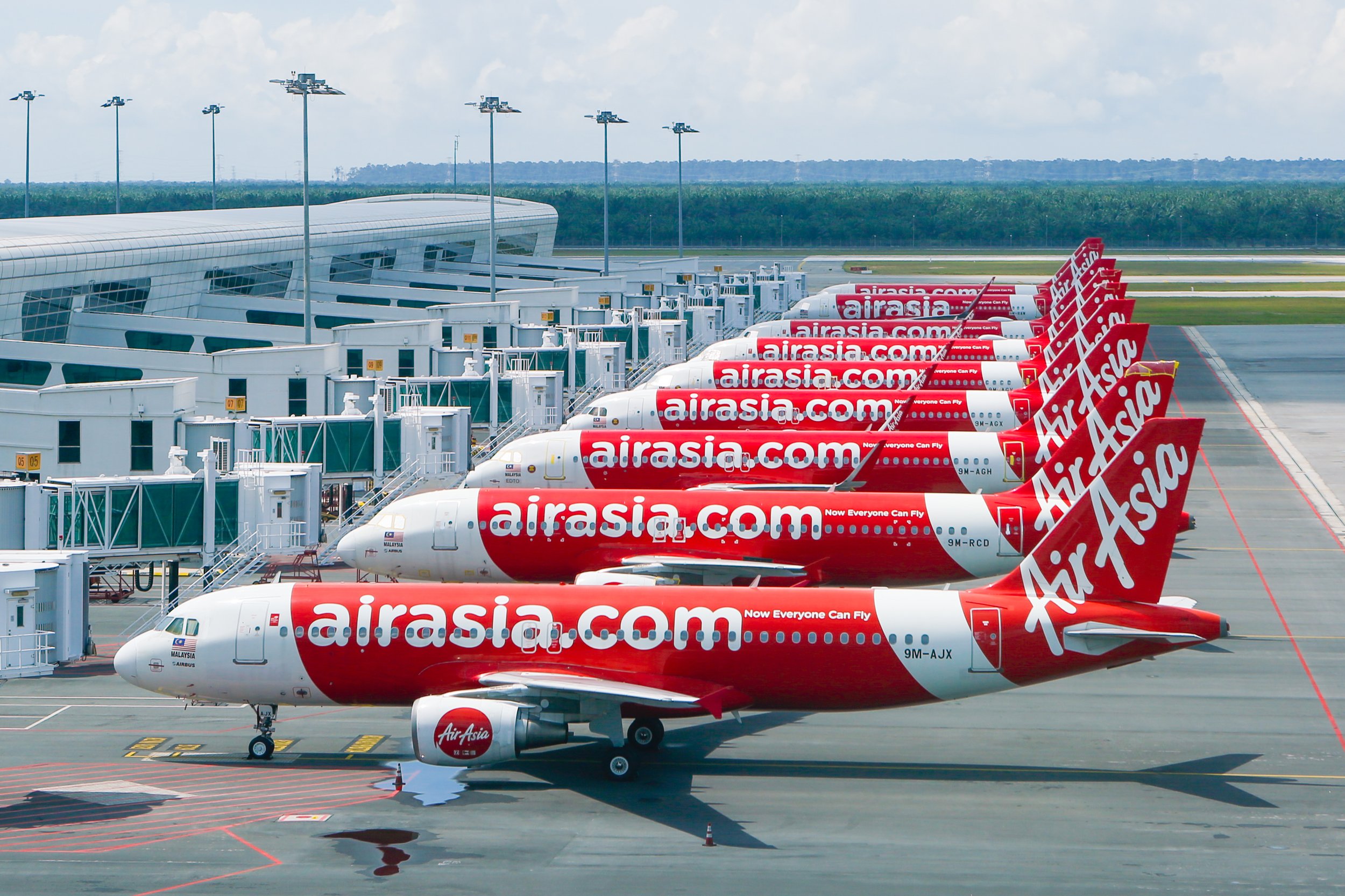
[Pre-Covid— AirAsia planes seen parked at Kuala Lumpur International Airport, Terminal 2 in 2020]
AirAsia, the world's leading low-cost airline, has announced that its plan to fully reactivate its 204 aircraft, supported by a refreshed agreement with its long-term partner and engine provider, CFM International. CFM’s focus on improving fleet stability on site and 24/7 virtual monitoring of AirAsia’s LEAP-1A engine operation provides a crucial catalyst for AirAsia to reinstate its full fleet across the Group.
At a glance
- Company
- AirAsia
- Announcement
- Partnership
- Location
- Kuala Lumpur
Key figures
- Aircraft fleet to reactivate
- 204 aircraft
- Aircraft returned to service
- 175 planes
- Target for end of Q3
- 180
- Target by year-end
- 200 planes
- Average aircraft flying this year
- 143 planes
- Fleet expansion plan
- above 300 aircraft in the next five years
People
- Bo LingamGroup CEO of AirAsia Aviation
- Tony FernandesCEO of Capital A
- Gaël MéheustPresident and CEO of CFM International
Products and programs
CEO of Capital A Tony Fernandes said, “After over two years of Covid, we are seeing the light at the end of the tunnel. We have made enormous strides in bringing back our planes and restarting our operations, balancing a mismatch of cost of 204 planes and revenue of flying 143 planes on average this year. Today, we have brought back 175 planes. CFM’s fleet stability support brings a vital catalyst for us to return to full activation. I am proud of Asia Digital Engineering (ADE), our own engineering facility, and want to thank each and every one of our engineers for not only doing the day-to-day work but also focusing on the Group’s aircraft reactivation work. We look forward to fourth quarter results when we’re going to see the real performance of AirAsia with the full fleet.”


With CFM’s strong focus on fleet stability and services support is a catalyst to enabling AirAsia to operate their LEAP engine fleet longer, and helping the airline reduce maintenance costs and operational expenses.
Gaël Méheust, president and CEO of CFM International said: “AirAsia has been a valuable CFM customer for nearly two decades and we are delighted to support them and their plans to fully reactivate their fleet. We take AirAsia’s trust as a great responsibility to keep supporting their fleet with the high-level CFM standards.”
AirAsia looks forward to capitalising on this achievement, as the airline reinstates its 204 fleet and expands to above 300 aircraft in the next five years, as it continues to connect people across Asean and beyond with affordable and best-value travel options.
*** END ***
If you detect any issues, problems, or errors in this press release content, kindly contact [email protected] to notify us (it is important to note that this email is the authorized channel for such matters, sending multiple emails to multiple addresses does not necessarily help expedite your request). We will respond and rectify the situation in the next 8 hours.
Questions around this news
What support is CFM providing for AirAsia’s aircraft reactivation?
The release says CFM is focusing on improving fleet stability on site and providing 24/7 virtual monitoring of AirAsia’s LEAP-1A engine operations. It describes this support as helping the airline reactivate its aircraft and operate its engine fleet longer, while aiming to reduce maintenance costs and operational expenses.
How many aircraft has AirAsia brought back, and what is its reactivation plan?
Capital A CEO Tony Fernandes said AirAsia had brought back 175 aircraft at the time of the announcement. The release says the group planned to fully reactivate its 204-aircraft fleet, with plans to restore 180 by the end of the third quarter and have 200 reactivated by year-end, as stated in the release headline.
What does virtual monitoring of aircraft engines generally involve?
Virtual engine monitoring uses information gathered during operation to help track an engine’s condition remotely. Maintenance teams can review indicators of performance or developing issues and use them to support maintenance planning. The specific data, monitoring methods and response procedures vary by operator and service provider.
What does fleet stability mean in airline operations?
Fleet stability generally refers to having aircraft reliably available for scheduled operations, with fewer disruptions from maintenance or other service issues. More predictable availability can help an airline plan aircraft use and schedules. The term does not by itself specify a particular performance measure or guarantee a certain level of reliability.
Earlier from AirAsia
- AirAsia and airasia Superapp win big at World Travel Awards Asia 2023
- AirAsia welcomes first direct flight to Kota Kinabalu from Hangzhou
- AirAsia welcomes inaugural flight from Hong Kong to Penang, marking seventh direct international route to the island
- airasia: Sounds of Asean
- AirAsia ramps up flights to China amid surge in travel demand
