

What Is a Publicity Stunt and How Brands Use It Effectively
March 11, 2026 at 03:49 AM UTC
 Written by Huey Yee
Most businesses face the same challenge: getting noticed without wasting budget.
Advertising is expensive, organic reach is limited, and competing for attention online is harder than ever.
That’s why some brands turn to publicity stunts. When done right, a single moment can generate more attention than weeks of planned marketing.
But publicity stunts are not about being loud for the sake of it. They are a deliberate tactic used to create fast visibility, spark conversation, and earn media coverage that businesses cannot easily buy through ads.
To understand whether this approach makes sense for a business, it helps to first understand what a publicity stunt actually is and how it works.
What Is a Publicity Stunt?
A publicity stunt is a planned action designed to attract attention in a short period of time. Its primary purpose is visibility, not long-term engagement or direct sales.
Unlike traditional marketing campaigns that run over weeks or months, publicity stunts are built around a single moment.
They rely on surprise, scale, or novelty to prompt people to notice, talk about, and share the brand.
Publicity stunts often take forms such as:
- A random overnight session at the brand’s store
- A brand collaborating with a celebrity for a one-off, highly visible stunt
- An unexpected window break during the live demo
Take The Ordinary’s floating skincare bottle stunt. The brand placed a massive replica of their cult-favorite product on a boat in the River Thames, right next to Tower Bridge.
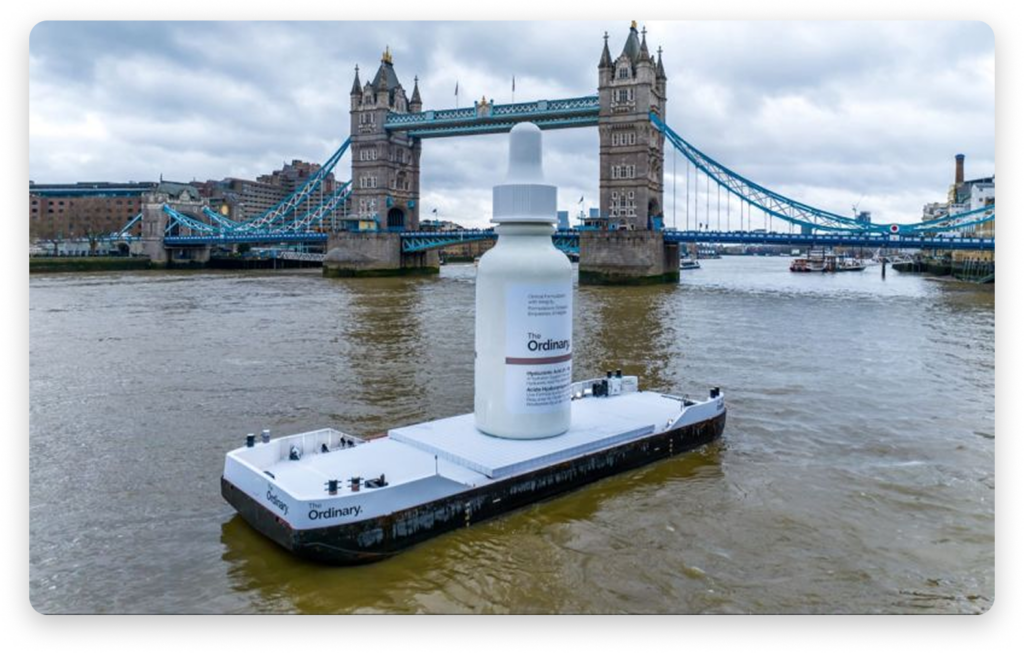
As a result, the brand and its product become widely discussed across media outlets and social platforms. That’s a successful publicity stunt.
Why Do Brands Use Publicity Stunt?
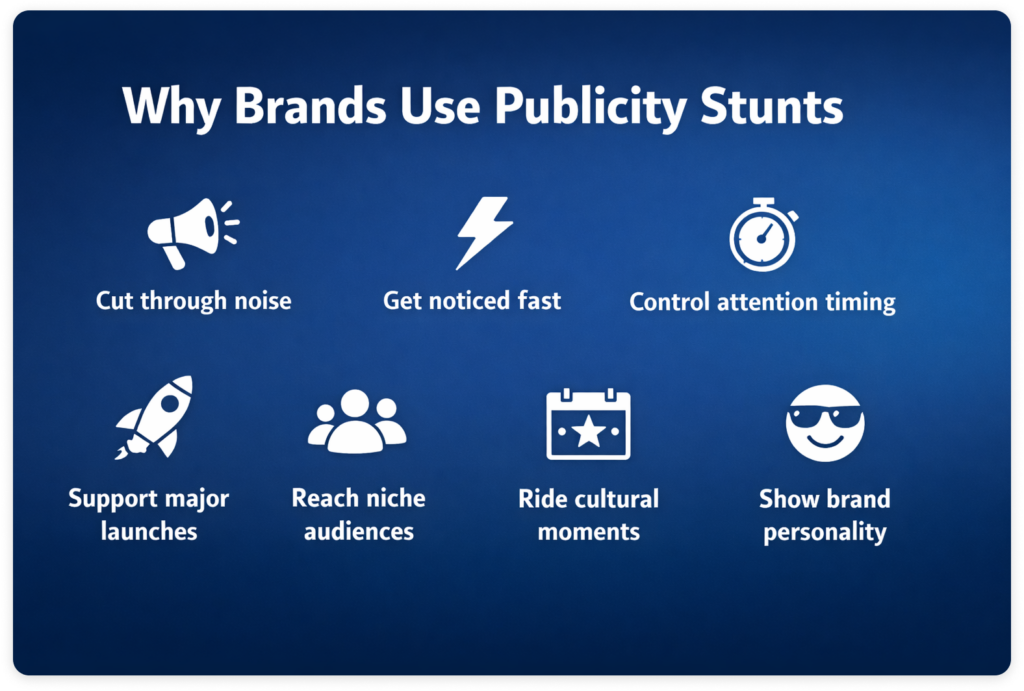
#1 Cut through noise
Most marketing messages look similar and compete for the same limited attention. Publicity stunts work because they interrupt that pattern.
Instead of blending in with ads or announcements, a stunt creates something unexpected that people pause to notice.
#2 Get noticed fast
Publicity stunts are often used when brands need attention immediately.
- Product launches
- Major announcements
- Competitive responses
Rather than building awareness over weeks, a single moment can generate discussion within days.
#3 Control attention timing
Stunts allow brands to decide when attention happens.
Instead of spreading messages across channels and hoping they gain traction, attention is concentrated into a specific moment.
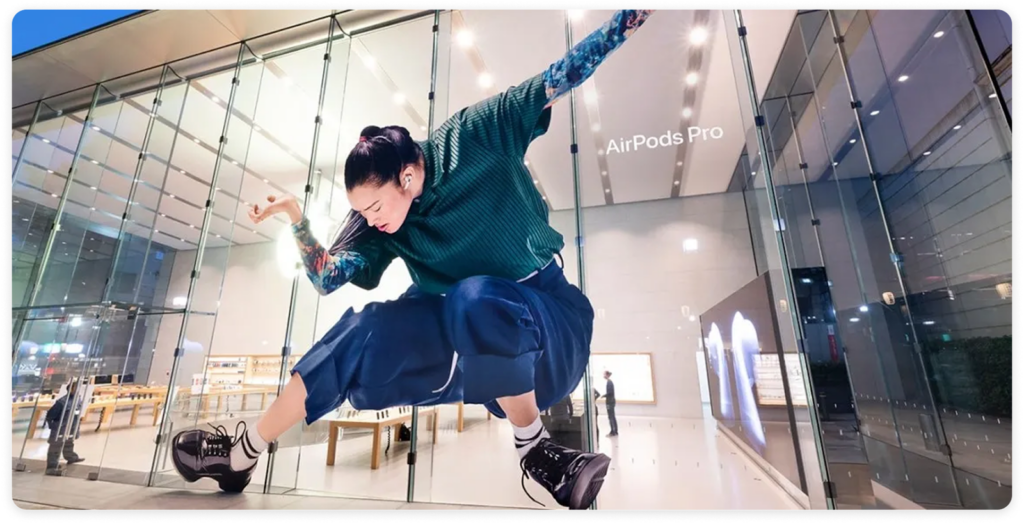
How Apple used dramatic outdoor ads for the surprise reveal of AirPods Pro is a strong example.
By concentrating all communication into a single moment, the brand was able to dominate both media coverage and public attention for the entire day.
#4 Support major launches
Publicity stunts are rarely the full strategy. They are often used to amplify a larger campaign.
A stunt creates curiosity and visibility, making audiences more receptive to the detailed messaging that follows.
#5 Reach niche audiences
Not every stunt is designed for mass appeal. Some are built to resonate with a specific group first.
When The Ordinary floated that giant product, skincare enthusiasts went wild. That focused energy then rippled outward to mainstream media.
That focused interest helped the moment spread outward to wider media.
#6 Ride cultural moments
Brands sometimes design stunts around events, holidays, or trends people are already paying attention to.
This reduces the effort needed to get noticed because the audience is already engaged elsewhere.
When timed well, the stunt feels relevant rather than intrusive.
#7 Show brand personality
A publicity stunt can communicate how a brand wants to be perceived without long explanations.
Want to show you’re bold? Pull a bold stunt. Want to seem playful? Create something fun and unexpected.
The action becomes the message—no lengthy brand storytelling required. People understand who you are by what you do.
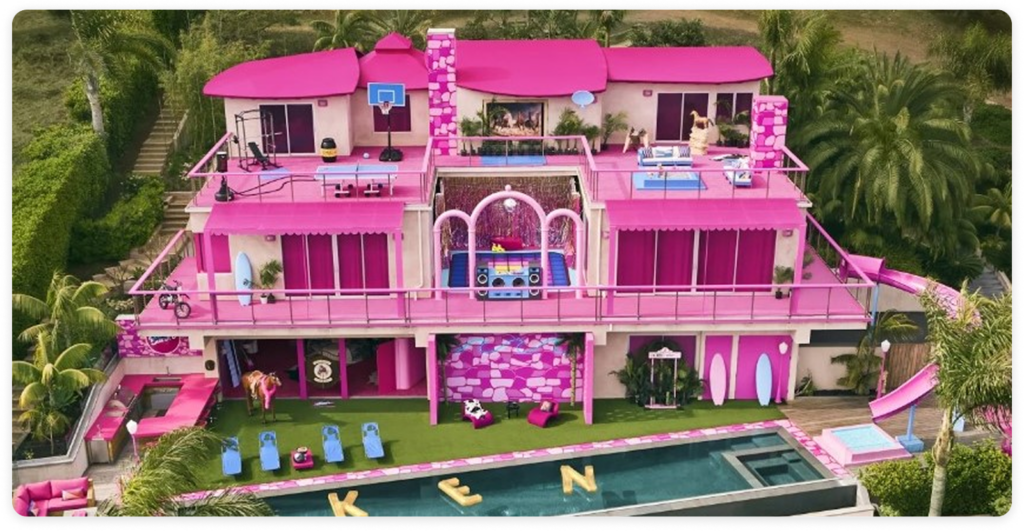
A good example is Barbie’s Malibu Dreamhouse activation. In the lead-up to the Barbie movie release, the iconic Dreamhouse appeared in Malibu and was listed on Airbnb for a free one-night stay.
Guests were “hosted” by Ken while Barbie was said to be away for the summer. The oversized pink house, complete with a pool and ocean views, leaned fully into Barbie’s playful, exaggerated identity.
The stunt arrived at the peak of cultural interest around the film and extended into collaborations across fashion, gaming, and lifestyle brands, led by Mattel. It did not explain what Barbie stands for. It showed it.
But not every PR stunt that gets attention delivers value. Some create lasting impact, others disappear as quickly as they appear.
The outcome depends on a few core factors that determine whether a stunt resonates or is forgotten.
What Makes a Successful PR Stunt?
Successful PR stunts share a few common traits:
#1 Clear relevance beyond the brand
A successful PR stunt works when people care about the idea even if the brand name is removed.
In other words, people should care about what is happening, not just who is behind it. When a stunt is built only around promoting a product or logo, it often feels like advertising and is easy to ignore.
When it is built around an idea that already matters to the audience, such as human achievement, social values, or shared curiosity, the attention comes naturally.
The brand benefits because it is associated with the idea, not because it is forcing a sales message.
#2 Strong connection to existing audience interests
A strong PR stunt connects with what the audience already likes, follows, or talks about.
It does not ask people to change their habits or figure out something unfamiliar just to understand the message.
Instead, it fits naturally into existing interests, platforms, and behaviors. A good example is how CeraVe leaned into internet humor with Michael Cera. The original video itself drew a large number of views and quickly became a talking point on Instagram and other social platforms.
What made it effective was not just the reach, but the reaction. People discussed it, questioned it, joked about it, and shared it organically. The conversation extended beyond the brand’s own post, with creators and users referencing the video in their own content.
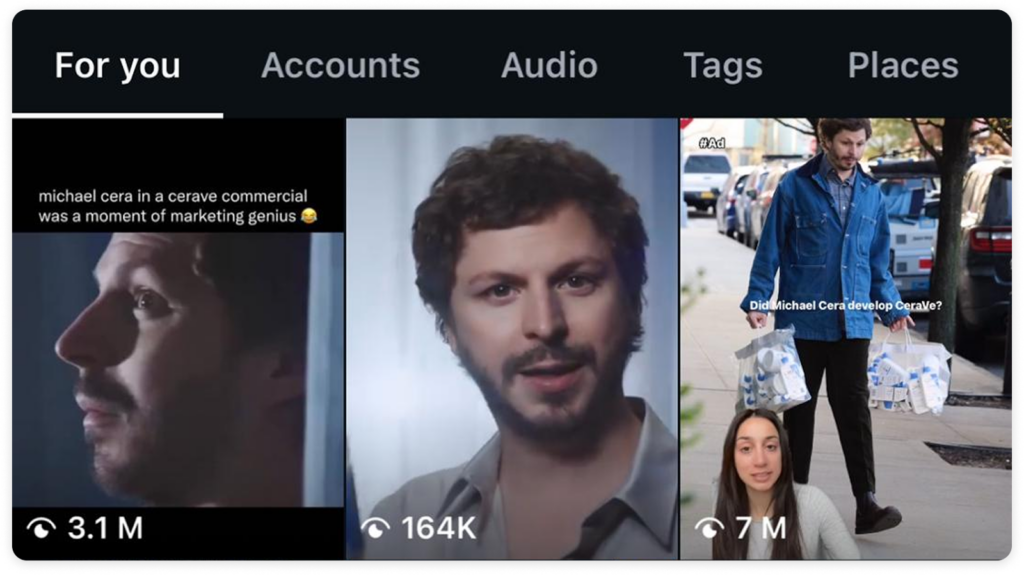
When a stunt matches how an audience already spends their time, it feels easy to engage with. People understand it quickly, are more likely to share it, and are more willing to talk about it.
In contrast, a stunt that ignores audience interests or asks for too much effort often feels forced and is easier to ignore.
This is why successful stunts often appear in places and formats the audience already uses, such as social media conversations, trending topics, or familiar cultural references.
#3 Timely execution
Timing matters because people do not pay attention to everything all the time.
A PR stunt is more likely to work when it happens at a moment when the audience is already alert, interested, or emotionally engaged.
If a stunt is launched when attention is elsewhere, even a strong idea can be overlooked.
Good timing can come from creating a moment or joining one that already exists.
Some stunts work because they introduce something new at exactly the right time. Others work because they connect to ongoing conversations, events, or cultural moments people are already talking about.
When the timing is right, the stunt feels relevant and easy to engage with. When the timing is wrong, it can feel out of place, insensitive, or simply ignored.
In short, timing determines whether a stunt feels timely and relevant, or late and disconnected.
#4 A story that can be explained in one sentence
Journalists need to understand and explain a stunt quickly.
Why? Because for a PR stunt to gain coverage, reporters need to understand what happened and why it matters almost immediately.
If a stunt requires long explanations, background context, or multiple clarifications, it becomes harder to cover and easier to skip.
Successful stunts can be summarized in a single sentence.
This makes them easy for journalists to report, headline, and share with their audiences. When the idea is simple and clear, media coverage focuses on the stunt itself rather than trying to explain it.
If the story is confusing, the stunt loses momentum and attention moves on quickly.
Examples of Successful Publicity Stunts
Let’s look at real examples of publicity stunts that generated the attention their creators wanted and delivered measurable business results. Each of these stunts succeeded for specific, identifiable reasons.
Example 1: Red Bull Stratos (A Product-Led Publicity)
In 2012, Red Bull sponsored Austrian skydiver Felix Baumgartner’s jump from the edge of space, 24 miles above Earth.
The event was broadcast live on YouTube and required years of planning, scientific collaboration, and significant investment.
Baumgartner broke the sound barrier during his free fall, setting multiple world records.
This event attracted media coverage not because Red Bull did it, but because it represented a historic moment in human achievement. News outlets covered it as a scientific story, not an advertising story.
The live broadcast drew 8 million simultaneous viewers on YouTube, setting a record at the time. The event generated an estimated $6 billion in media value, with coverage spanning news outlets, sports media, and scientific publications.
Example 2: IHOP Becomes IHOb (A Cultural Moment Stunt)
In 2018, IHOP (International House of Pancakes) temporarily changed its name to IHOb, announcing the change on social media without immediately revealing what the “b” stood for.
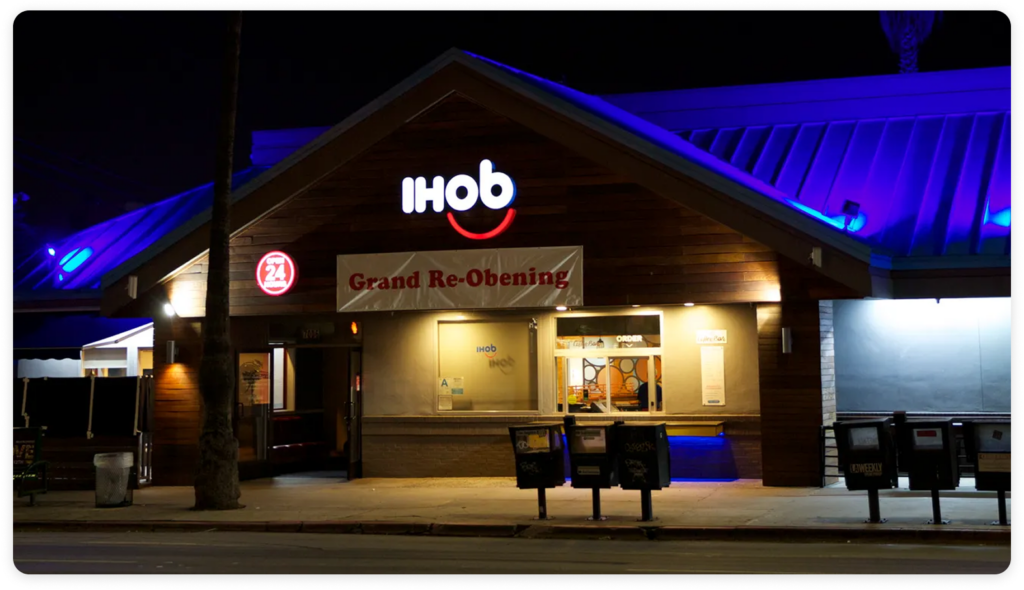
The mystery generated intense speculation across social media for several days before the company revealed that “b” stood for burgers.
The stunt was a success because it created a puzzle that people wanted to solve. The timing aligned with the social media era’s love of speculation and viral mystery.
The temporary name change was simple enough to grasp in seconds but intriguing enough to prompt discussion.
The campaign generated 36 billion media impressions and drove a fourfold increase in burger sales.
Competitors like Burger King and Wendy’s joined the conversation, creating additional free publicity as the story expanded beyond IHOP’s initial announcement.
Example 3: Patagonia’s “Don’t Buy This Jacket” (An Industry-Specific Stunt)
On Black Friday 2011, outdoor clothing company Patagonia ran a full-page ad in The New York Times with the headline “Don’t Buy This Jacket.”
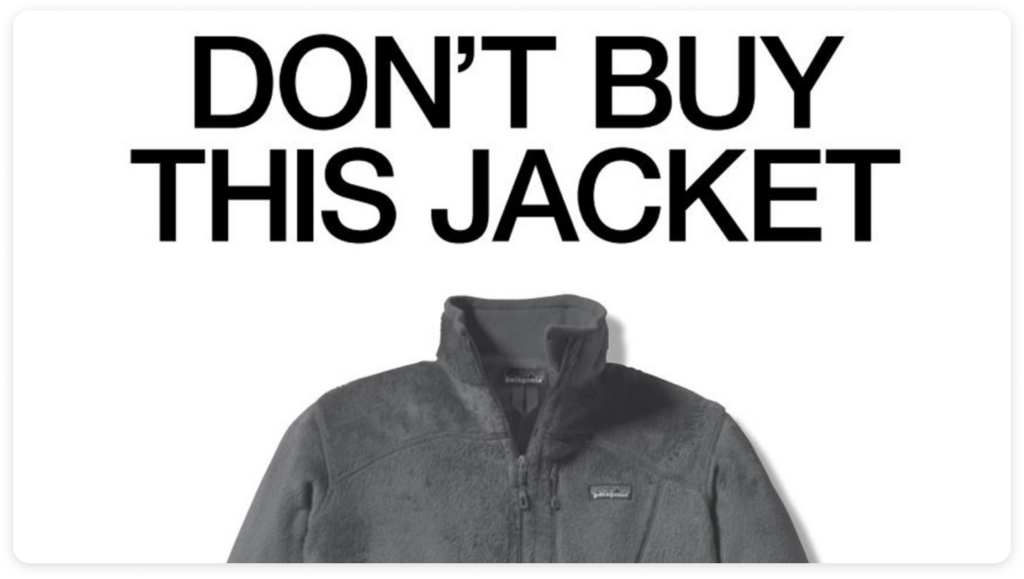
The ad explained the environmental cost of producing one of their jackets and urged consumers to think carefully before making unnecessary purchases.
The stunt was counterintuitive. Most brands use Black Friday to drive sales, but Patagonia used it to challenge consumerism.
This contradiction created a newsworthy story because it went against expected behavior. Media outlets covered it not because Patagonia spent money on an ad, but because the message was unexpected and provocative.
The campaign aligned perfectly with Patagonia’s existing brand values around environmental sustainability.
It didn’t feel like a gimmick because the company had a long history of prioritizing environmental responsibility over profit maximization.
The stunt reinforced existing brand identity rather than contradicting it.
But, not every publicity stunt succeeds. Some generate attention but damage the brand. Others simply fall flat, wasting budget and failing to achieve any meaningful impact.
Examples of Failed Publicity Stunts
Understanding why stunts fail is as important as understanding why they succeed.
Example 4: U2’s Forced Album Download (Attention Without Relevance)
In 2014, Apple partnered with U2 to promote the band’s new album Songs of Innocence by automatically adding it to the music libraries of roughly 500 million iTunes users.
The album appeared on users’ devices without permission, and many people found it difficult to remove.
The stunt immediately drew massive attention because nearly every iTunes user was affected.
However, the reaction was largely negative. Many users felt their personal space had been violated by having content forced onto their devices, even if it was free.
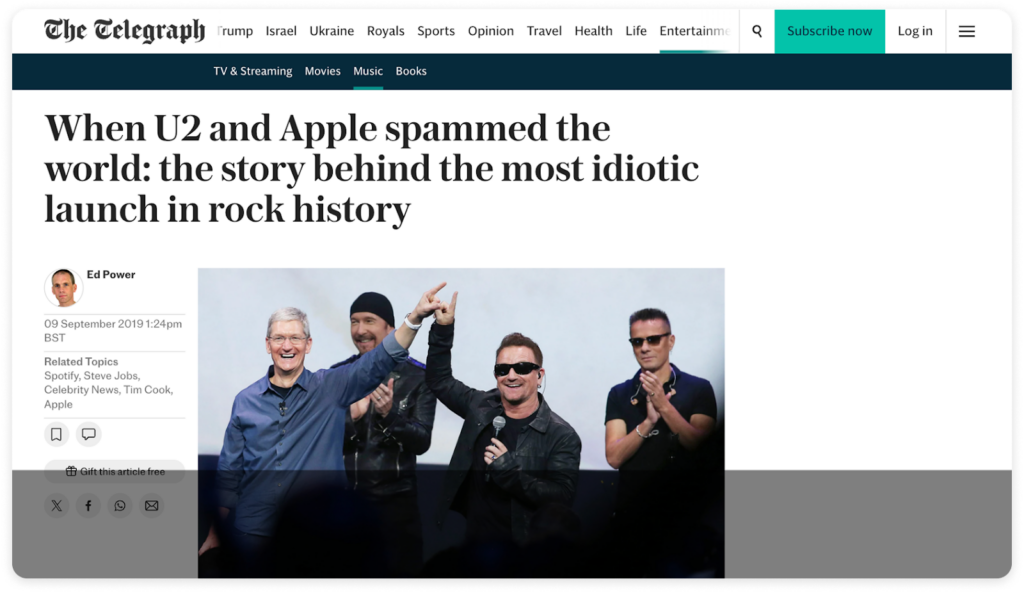
Instead of focusing on the album itself, media coverage centered on user frustration and Apple’s decision-making. Headlines highlighted backlash and complaints, not the music or the partnership.
The stunt became the story, and the intended message was lost.
While the campaign achieved enormous reach, it lacked relevance and consent. Exposure at this scale created annoyance rather than goodwill.
The core mistake was assuming that more exposure automatically equals success. The stunt prioritized visibility over user choice, ignoring how people would actually experience it.
The situation worsened due to the initial response from Apple and U2.
Both appeared surprised by the backlash, which made the move seem tone-deaf. This reinforced the perception that the brands were disconnected from their audience.
Example 5: Pepsi’s Kendall Jenner Ad (Poor Timing and Misjudged Audience)
In 2017, Pepsi released an ad featuring Kendall Jenner leaving a photoshoot to join a street protest.
The ad ends with Jenner handing a Pepsi to a police officer, after which the tension disappears and the crowd celebrates.
The ad launched while real protests over police violence and social justice were happening across the United States. In that context, the message felt disconnected from reality.
It suggested that serious social conflict could be resolved through a symbolic, feel-good gesture, which many viewers found dismissive and inappropriate.
The backlash was immediate.
Critics accused Pepsi of trivializing social movements and using them as a marketing backdrop.
Within 24 hours, the company pulled the ad and issued an apology. Coverage focused on the misjudgment, not the brand message.
The core failure was a lack of authenticity and clarity. The ad tried to acknowledge social activism without taking a real position, aiming to appeal to everyone at once. That approach satisfied no one.
The takeaway is straightforward. When brands reference social issues without understanding their context or weight, attention turns into backlash rather than goodwill.
Not all attention is positive. This is why the impact of a publicity stunt must be measured beyond reach and impressions.
How to Measure the Impact of a Publicity Stunt
Measuring a publicity stunt starts with understanding its purpose.
A stunt is not meant to do everything. It is usually designed to create attention, shape perception, or support a larger business objective. The metrics you track should reflect that.
#1 Media coverage quality
Count how many outlets covered the stunt, but pay more attention to where it was covered and how it was framed.
- Was the coverage in relevant, credible publications?
- Did headlines focus on the intended message, or on controversy and confusion?
- Was the brand positioned positively, neutrally, or negatively?
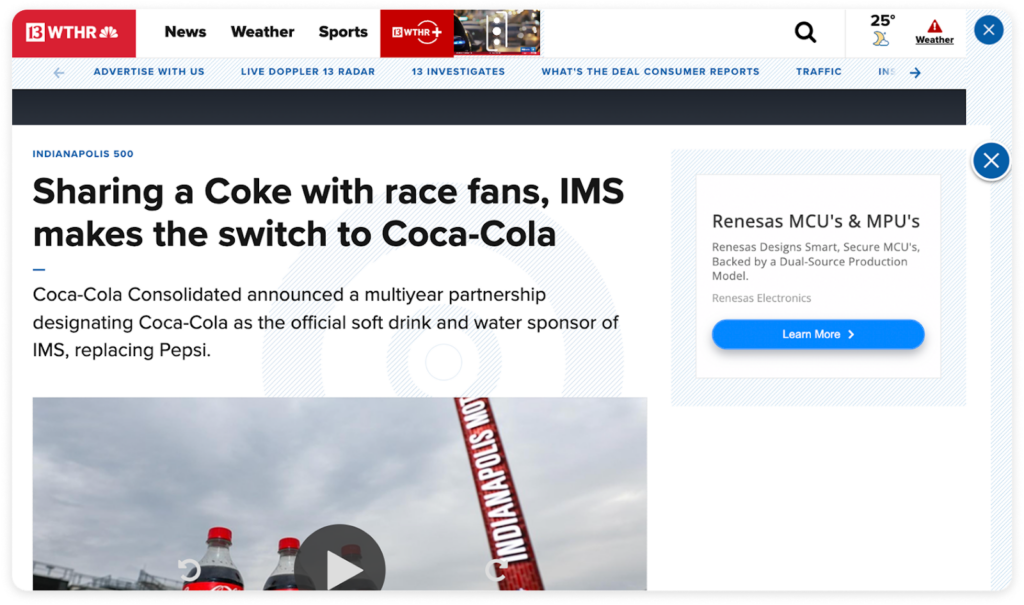
A stunt that generates fewer but relevant and accurate stories is more valuable than one that creates widespread but unfocused coverage.
#2 Audience response and sentiment
A publicity stunt can be widely seen and still fail if the reaction damages trust or weakens the brand.
What is important is how people respond to the stunt and what they say about it after the initial exposure.
To evaluate this, look at questions such as:
- Are people discussing the stunt positively, critically, or dismissively?
- Are conversations aligned with the message the brand intended to communicate?
- Did the stunt spark genuine discussion or just short-lived reactions?
Sentiment analysis across social platforms and comments helps distinguish interest from backlash.
#3 Engagement beyond initial exposure
Look at what people did after they noticed the stunt.
Initial attention only has value if it leads to further action. Engagement shows whether the stunt held interest beyond the first impression.
Signs of meaningful engagement include people sharing the stunt, commenting on it, or discussing it in detail.
It may also lead to increased searches for the brand or related topics, as well as traffic to owned channels such as the website or social profiles.
High engagement indicates that the stunt sustained attention and encouraged deeper interaction, rather than creating a brief spike that quickly disappeared.
#4 Impact on brand perception
Some publicity stunts are designed to influence perception rather than drive immediate action. In these cases, success depends on how the stunt reshapes the way the brand is viewed.
Key indicators include:
- Shifts in brand associations toward the intended positioning
- Whether the stunt reinforced or weakened existing brand values
- The response of the intended audience, including signs of attraction or alienation
Surveys, brand lift studies, and post-campaign feedback are commonly used to measure these perception changes.
#5 Longevity of the story
Short-lived attention fades quickly.
A strong publicity stunt continues to be referenced after the initial moment has passed, showing that it created lasting impact rather than a brief spike.
Stunts with a longer tail remain part of media coverage, brand storytelling, and industry discussions. They can also be reused in future marketing, PR, or case studies, extending their value over time.
Longevity helps separate meaningful impact from momentary noise.
In short, a successful publicity stunt is measured by more than how loud it was. It is measured by whether the attention was relevant, positive, and connected to real business outcomes.
Final Takeaway
Publicity stunts are high-risk, high-reward tactics that work only when they create stories that matter beyond the brand itself.
The strongest stunts do not feel manufactured. They feel like moments of genuine interest, achievement, or cultural relevance that naturally attract attention.
When stunts succeed, they follow clear patterns, including:
- Connect to what audiences already care about
- Arrive at the right moment
- Simple enough to grasp instantly
- Authentic to the brand executing them
- Demonstrate value rather than simply claiming it
At the end of the day, publicity stunts are not shortcuts to success. They are tools that amplify what is already there.
With clear intent and discipline, they can accelerate credibility. Without those foundations, they expose weaknesses instead.
Frequently Asked Questions (FAQs)
Q: What is the main purpose of a publicity stunt?
A: A publicity stunt is designed to create immediate attention and visibility, not long-term engagement or direct sales.
Q: How is a publicity stunt different from a regular marketing campaign?
A: Publicity stunts focus on a single moment to generate buzz quickly, while traditional campaigns run over a longer period with sustained messaging.
Q: Do publicity stunts actually help businesses grow?
A: They can, but mostly by generating attention, media coverage, and brand awareness rather than direct conversions.
Q: Why do some publicity stunts go viral while others don’t?
Successful stunts are simple, timely, relevant to the audience, and easy to explain, while unsuccessful ones often feel forced or confusing.
Q: Are publicity stunts only for big brands with large budgets?
No. While some stunts are large-scale, others are designed to target niche audiences and can still gain traction if they resonate well.